• Acquasantiere

    italia

    Parrocchia Santuario Maria SS. di Carpignano

    Acquasantiere

    Antonio Pesiri e Claudio Forgione

    Sec. XXI

    Marmi policromi

    Parish Sanctuary Maria SS. di Carpignano

    Holy water stoup

    Antonio Pesiri and Claudio Forgione

    XXI century 

    Polychrome marbles


    L’acquasantiera è un recipiente, di solito posto agli ingressi dell’aula sacra, utilizzato per contenere l’acqua benedetta.

    L’uso rituale dell’acqua per scopi purificatori era già conosciuto nel mondo  pagano e giudaico. Con l’affermazione del credo cristiano l’uso dell’acqua purificatrice venne trasferito nel sacramento del battesimo. Successivamente, in ricordo e per estensione del valore sacramentale del battesimo, l’uso venne introdotto anche nella liturgia domenicale.

    Dall’aspersione domenicale all’uso di segnarsi con l’acqua santa all’ingresso degli edifici sacri, il passo fu breve e, a partire dall’età carolingia, si diffuse l’uso delle acquasantiere nelle chiese.

    Le acquasantiere possono essere a labbro (a muro), oppure a pila (su colonna o piedistallo).

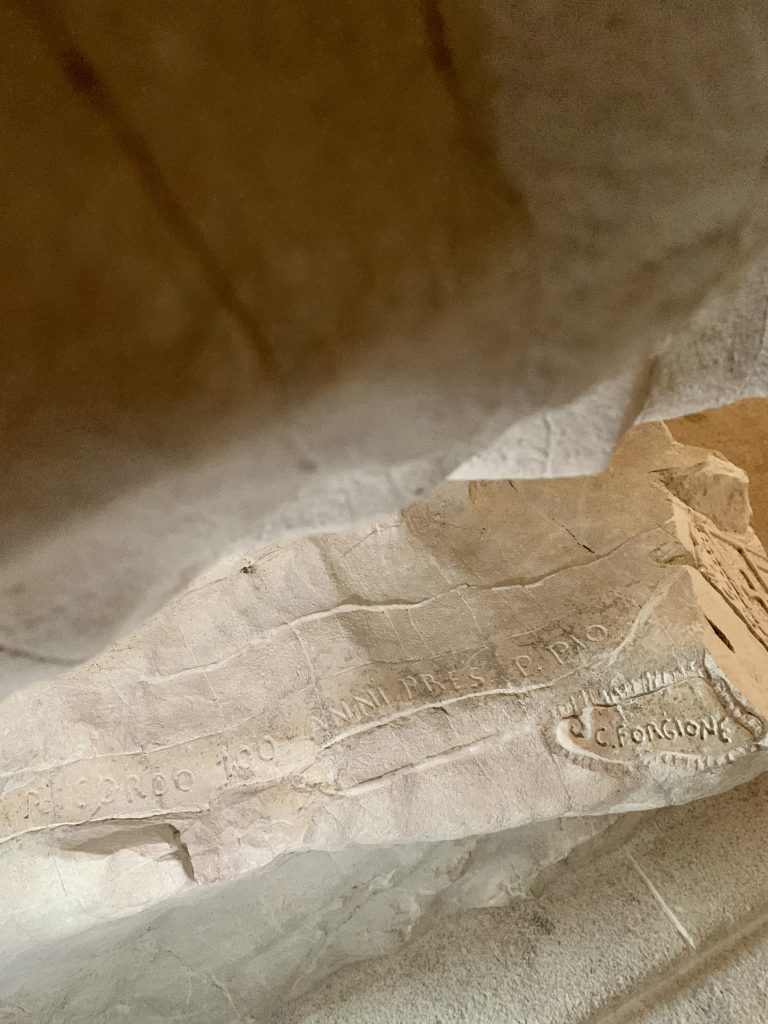
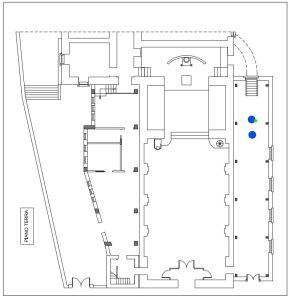
    Le due acquasantiere di cui trattiamo sono del secondo tipo, sono poste ai lati dell’antiporta e sono entrambe in onice di Gesualdo. Sono state tornite dall’artigiano Antonio Pesiri di Carife e decorate con elementi floreali da Claudio Forgione di Gesualdo.

    M. V.


    The holy water stoup is a container, usually placed at the entrances of the sacred hall, used to contain holy water.

    The ritual use of water for purifying purposes was already known in the pagan and Jewish world. With the affirmation of the Christian belief, the use of purifying water was transferred to the sacrament of baptism. Subsequently, in remembrance and by extension of the sacramental value of baptism, the use was also introduced in the Sunday liturgy.

    From Sunday sprinkling to the use of marking oneself with holy water at the entrance to sacred buildings, the step was short and, starting from the Carolingian age, the use of holy water fonts spread in churches.

    The holy water fonts can be lip (wall), or stack (on column or pedestal).

    The two holy water stoups we are dealing with are of the second type, they are placed on the sides of the ante-door and are both in Gesualdo onyx. They were turned by the craftsman Antonio Pesiri of Carife and decorated with floral elements by Claudio Forgione of Gesualdo.

    M. V.

  • Via Crucis

    italia

    Parrocchia Santuario Maria SS. di Carpignano

    Scultura

    Via Crucis

    Salvatore Fucci

    Sec. XXI (2014)

    Basso rilievo legno di Toulipier

    Parish Sanctuary Maria SS. di Carpignano

    Sculpture

    Via Crucis

    Salvatore Fucci

    XXI century (2014)

    Bas-reliefs in toulipier wood

    Nel corso dell’ultimo restauro del 2014 la Chiesa si impreziosisce dell’opera realizzata dal Maestro Salvatore Fucci di Fontanarosa, autore già di numerose opere presenti all’interno del Santuario.

    Le quattordici tavole della Via Crucis sono inserite nelle lunette lungo i due lati
    dell’unica navata della chiesa. Esse raffigurano le scene della Passione di Cristo, tratte dai Vangeli e dalla tradizione. I volti dei personaggi sono di
    un crudo realismo; sono le persone dell’epoca: donne, contadini, pastori,
    commercianti e artigiani che si assiepavano lungo i vicoletti di Gerusalemme
    e lungo la strada che conduceva sull’altura del Calvario incuriositi da quella scena di dolore. Sono, però, anche i volti di oggi, di quanti continuano ad operare scelte non evangeliche, che alimentano le ingiustizie. La Passione di Gesù resa iconicamente su queste tavole di legno vuole ricordare ad ogni pellegrino che tutti siamo salvati e redenti da questo Amore smisurato di Cristo. 

    A cura di

    Don Antonio Fucci

    During the last restoration in 2011, the Church is embellished with the work created by the Master Salvatore Fucci di Fontanarosa, author of numerous works already present inside the Sanctuary.

    The fourteen tables of the Via Crucis are inserted in the lunettes along the two sides of the single nave of the church. They depict scenes from the Passion of Christ, taken from the Gospels and from tradition. The faces of the characters are of raw realism; they are the people of the time: women, peasants, shepherds, traders and artisans who crowded along the alleys of Jerusalem and along the road that led to the height of Calvary, intrigued by that scene of pain. However, they are also the faces of today, of those who continue to make non-evangelical choices, which feed injustice. The Passion of Jesus rendered iconically on these wooden boards wants to remind every pilgrim that we are all saved and redeemed by this boundless Love of Christ.

     Edited by 

    Don Antonio Fucci

  • Statua Madonna di Carpignano

    italia

    Parrocchia Santuario Maria SS. di Carpignano

    Scultura

    Madonna con Bambino

    Ambito culturale campano

    Sec. XX (seconda metà)

    Cartapesta

    Parish Sanctuary Maria SS. of Carpignano 

    Sculpture

    Madonna with child 

    Campania area

    XX century (second half)

    Papier-mache  

    Una prima statua della Madonna di Carpignano venne realizzata in occasione della Solenne Incoronazione del quadro della Madonna, il cui decreto di emanazione porta la data del 4 maggio 1945, ma l’incoronazione vera e propria avvenne il 18 agosto 1945, in occasione della festa della Madonna di Carpignano, che allora si svolgeva non la prima domenica di settembre, ma la domenica successiva il 15 agosto.

    Per quell’occasione venne scolpita in legno una statua della Madonna che riproduceva le fattezze dell’immagine della tavola.

    Questa prima statua, purtroppo, andò distrutta durante il terremoto del 23 novembre 1980.

    Nel corso dell’anno successivo venne realizzata in cartapesta una nuova stata processionale della Madonna di Carpignano.    

    R. M.

    A first statue of the Madonna of Carpignano was made on the occasion of the Solemn Coronation of the painting of the Madonna, whose decree of issue bears the date of 4th May 1945, but the actual coronation took place on 18th August 1945, on the feast of the Madonna of Carpignano, which then took place not on the first Sunday of September, but on the Sunday following the 15th August.

    For that occasion, a statue of the Madonna was carved in wood that reproduced the features of the image of the table.

    Unfortunately, this first statue was destroyed during the earthquake of 23rd November 1980.

    During the following year, a new processional state of the Madonna of Carpignano was made of papier-mache.

    R.M.

  • Tabernacolo, Altare e reliquia San Pio
    italia

    Parrocchia Santuario Maria SS. di Carpignano
    Altare e Tabernacolo  

    Claudio Forgione

    Sec. XXI

    Breccia irpina

    Reliquia San Pio da Pietrelcina

    Parish Sanctuary SS. Maria of Carpignano

    Altar and Tabernacle

    Claudio Forgione

    XXI century

    Irpinan breach

    Relic of St. Pio of Pietrelcina

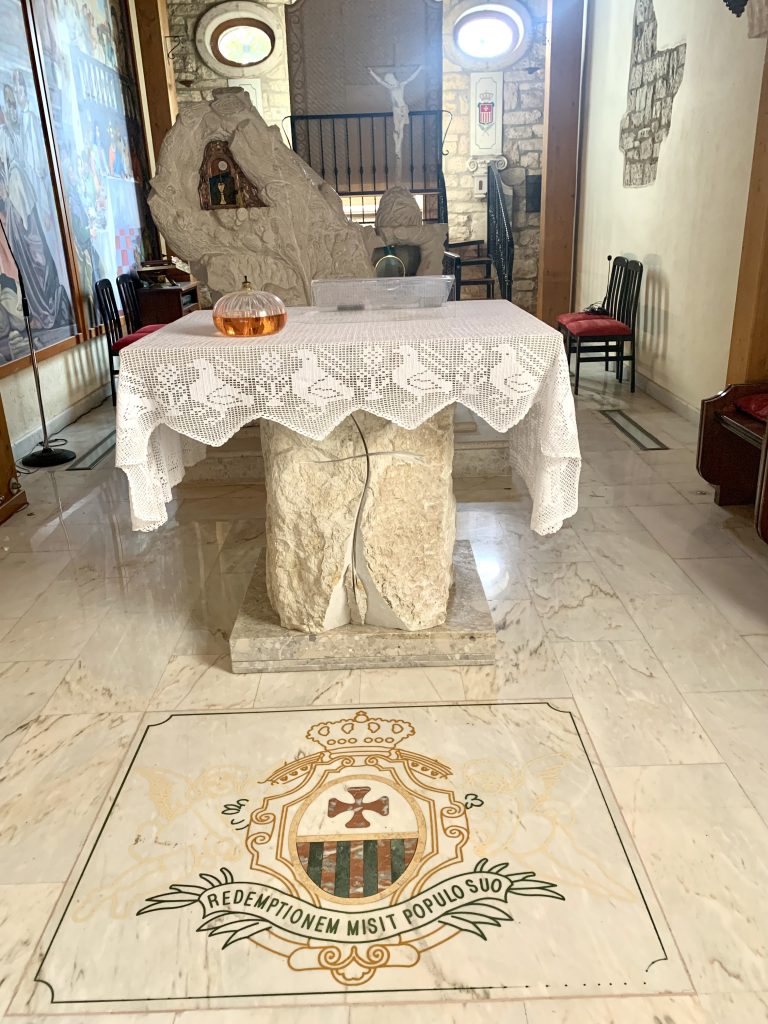
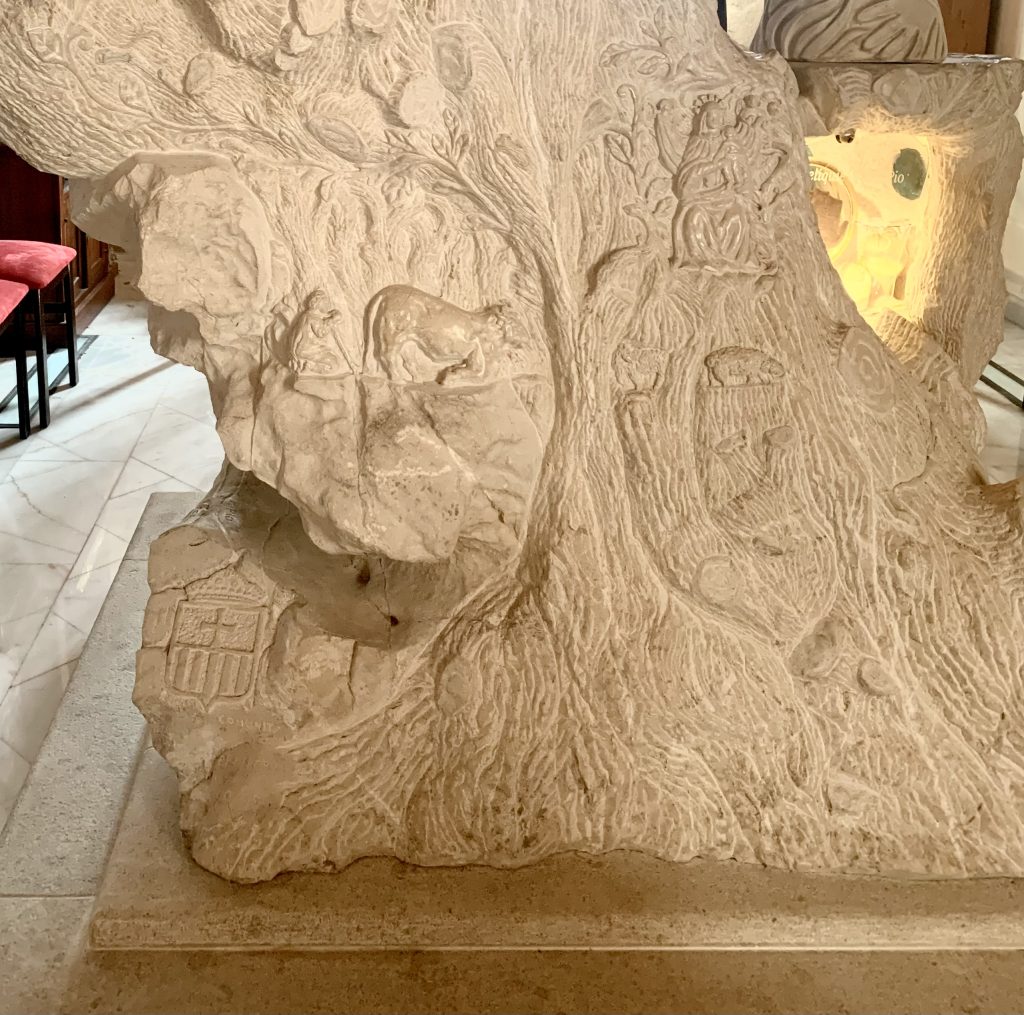
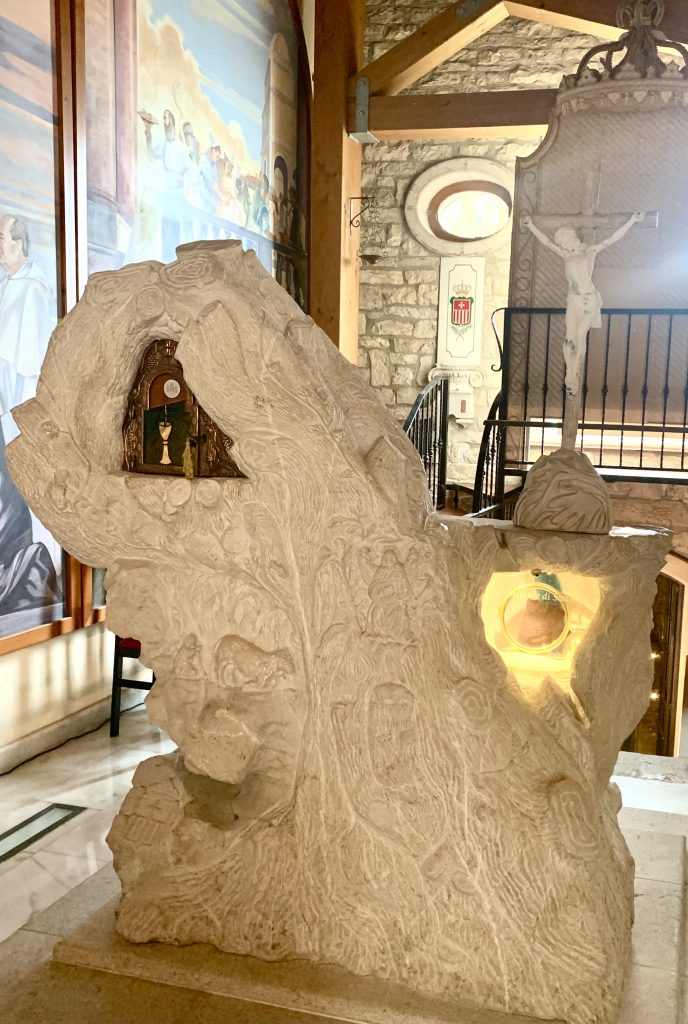
     All’interno della cappella si trova un altare e un basamento scultoreo per l’alloggio del Tabernacolo e la reliquia di San Pio da Pietrelcina. Le opere sono state realizzate su un masso proveniente da Pietrelcina e lavorato dallo scultore Claudio Forgione, che ha voluto rappresentare la radice e il tronco del carpino su cui sarebbe stata ritrovata la venerata tavola dipinta della Madonna di Carpignano. L’opera è impreziosita da un basso rilievo che racconta la scena del ritrovamento e, in basso, si distingue nettamente la scena raffigurante il quadro fra i rami e il bue inginocchiato, accompagnato da un giovane pastorello.

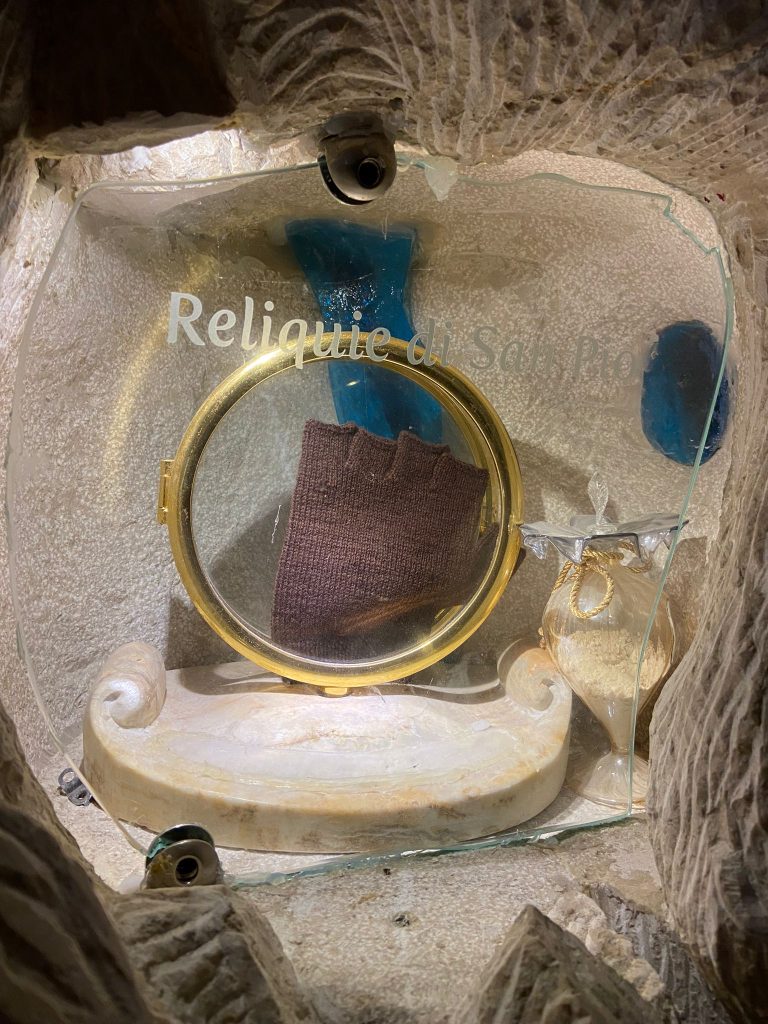
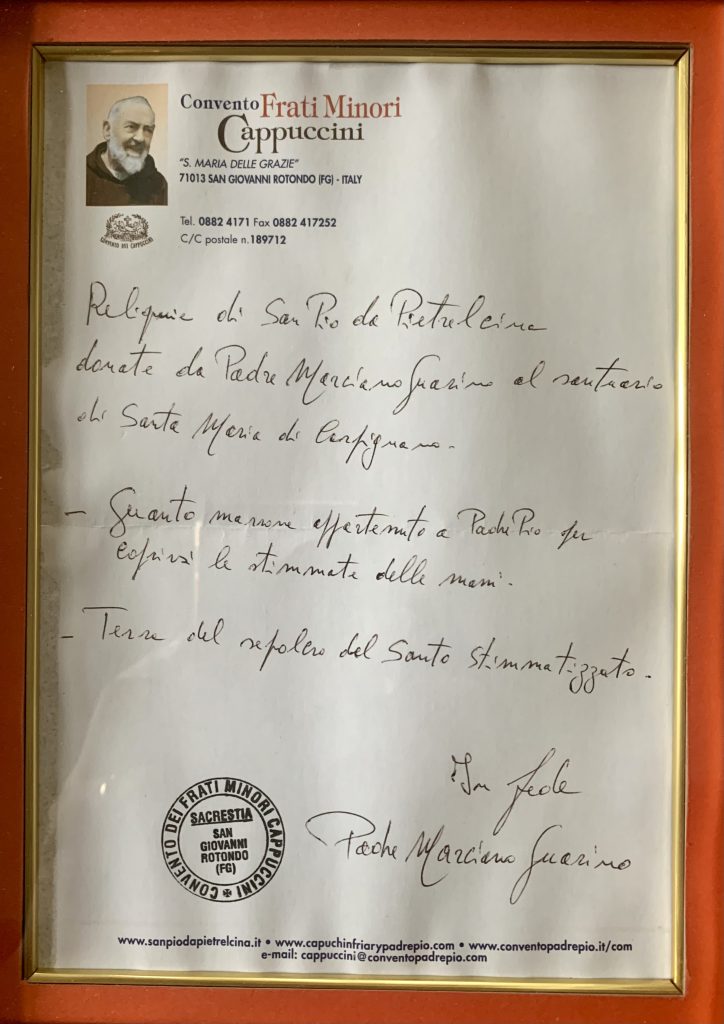
    Nel ceppo marmoreo è presente una nicchia illuminata e protetta da un vetro, dove trova alloggio la preziosa reliquia del guanto di San Pio da Pietrelcina. La reliquia fu consegnata, il 29 agosto del 2009, nelle mani del parroco Padre Antonio Venuta da parte di Padre Marciano Guarino, cappuccino di Grottaminarda e gran devoto della Madonna di Carpignano, che alcuni anni dopo arricchì la nicchia con un’ulteriore reliquia, una ampolla di vetro soffiato contenente polvere del Santo, recuperate al momento dell’esumazione.

    Nel lontano novembre del 1909, il giovane fr. Pio da Pietrelcina, ancora studente nella vicina Gesualdo, venne in visita al Santuario per pregare ai piedi della Madonna di Carpignano. Tale episodio è ben rappresentato in un grande quadro a destra dell’ingresso alla cappella.

    L’attuale cappella in legno e muratura in pietra è stata ultimata nel 2009, su disegno e direzione dei lavori dell’Ing. Antonio Michele Uva di Carpignano.  Al suo posto, nel 1859, esisteva una costruzione a due piani, prima usata a piano terra come sacrestia e al piano rialzato come deposito di foraggio per gli animali da trasporto e poi come abitazione dei religiosi. In seguito al terremoto del 1980, tale costruzione andò distrutta e demolita e non più ricostruita per mancanza di fondi.  Tuttavia, grazie all’interessamento di Padre Antonio Venuta, alla generosità dei fedeli e alla collaborazione di una devota e graziata famiglia di Caserta, è stata poi realizzata la cappella che, sul fondo, ospita una rampa di scale che scende verso un’antica cripta del Santuario, dove scorre una fonte d’acqua e luogo scelto per celebrare rituali battesimali.

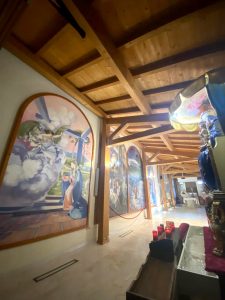
    Sempre all’interno della cappella, su tutto il lato sinistro, trovano alloggio le tele dipinte dall’artista Tullio De Franco, fino al 2009 collocate in chiesa.


    S.B.

    Inside the chapel there is an altar and a sculptural base for housing the Tabernacle and the relic of Saint Pio of Pietrelcina. The works were made on a boulder from Pietrelcina and done by the sculptor Claudio Forgione, who wanted to represent the root and trunk of the hornbeam on which the venerated painted panel of the Madonna of Carpignano would have been found. The work is embellished with a low relief that tells the scene of the discovery and, below, the scene depicting the painting among the branches and the kneeling ox, accompanied by a young shepherd boy.

    In the marble block there is an illuminated niche and protected by a glass, where the precious relic of the glove of San Pio da Pietrelcina is placed. The relic was delivered, on 29th August 2009, in the hands of the parish priest Father Antonio Venuta from Father Marciano Guarino, Capuchin of Grottaminarda and great devotee of the Madonna of Carpignano, who a few years later enriched the niche with another relic, an ampoule of blown glass containing the Saint’s powder, recovered at the time of exhumation.

    Back in November 1909, the young friar Pio da Pietrelcina, still a student in the nearby Gesualdo, came to visit the Sanctuary to pray at the foot of the Madonna of Carpignano.

    This episode is well represented in a large painting to the right of the entrance to the chapel.

    The current chapel in wood and stone was completed in 2009, based on a design and management of the works of the Inge. Antonio Michele Uva of Carpignano. In its place, in 1859, there was a two-story building, previously used on the ground floor as a sacristy and on the mezzanine as a forage depot for transport animals and then as a home for the religious. Following the earthquake of 1980, this building was destroyed and demolished and not rebuilt anymore due to lack of funds. However, thanks to the interest of Father Antonio Venuta, to the generosity of the faithful and to the collaboration of a devoted and graced family of Caserta, the chapel was then built which, at the bottom, houses a flight of stairs that descends towards an ancient crypt of the Sanctuary, where a source of water flows and a place chosen to celebrate baptismal rituals.

    Still inside the chapel, on the entire left side, the painted canvases by the artist Tullio De Franco are housed, placed in the church until 2009.


    Sonia Bruno

  • Dipinti di Tullio De Franco

    italia

    Parrocchia Santuario Maria SS. di Carpignano

    Dipinti

    Scene di Vita di Maria e di Gesù

    Tullio De Franco

    Sec. XX

    Olio su tela

    Parish Sanctuary Maria SS. di Carpignano

    Paintings

    Scenes from the Life of Mary and Jesus

    Tullio De Franco

    XX century

    Oil painting on canvas

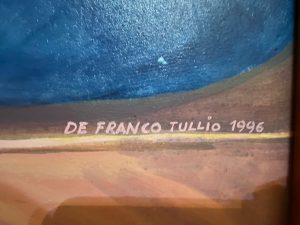
    Tullio De Franco nasce a Foggia nel 1934. Abbandonati gli studi classici si dedicò alla pittura frequentando prima il liceo artistico e poi l’accademia di Belle Arti di Napoli. Insegnò Discipline Pittoriche al I° Liceo Artistico di Roma, poi Pittura all’Accademia di Belle Arti RUFA.

    Prese parte a numerose rassegne, premi d’arte e mostre, personali e collettive, in spazi pubblici e gallerie private, in Italia e all’estero. Per alcuni anni visse ad Avellino e in Irpinia lasciando numerose opere, tra cui, il mosaico monumentale che decora la cripta paleocristiana del Duomo di Avellino. È morto a Roma nel 2011.

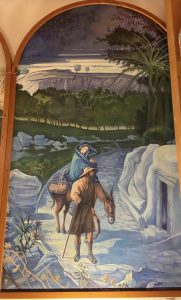
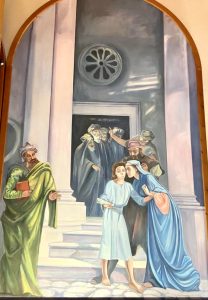
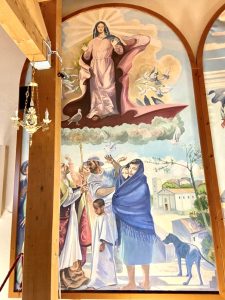
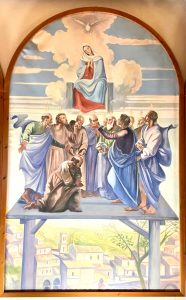
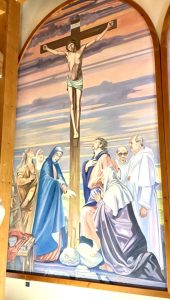
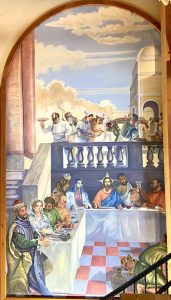
    Nel Santuario di Carpignano sono conservate otto tele raffiguranti scene della vita di Maria e di Gesù. Nello specifico le tele raffigurano: l’Annunciazione, la nascita di Gesù, la fuga dall’Egitto, il ritrovamento di Gesù nel tempio, le nozze di Cana, la crocifissione di Gesù, la discesa dello Spirito Santo, l’assunzione della Vergine.

    Le opere furono volute dai padri Mercedari Pasquale Pasquariello e Nicola Di Rienzo, rispettivamente, padre superiore e parroco del Santuario, per decorare le cappelle laterali della Chiesa dopo il terremoto del 1980. Successivamente, con il restauro e il rinnovamento della Chiesa, sono state adagiate nella cappella laterale.

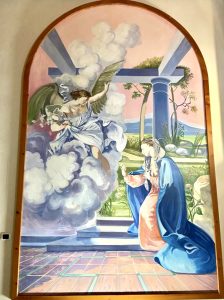
    Nel primo quadro è raffigurata in primo piano la Vergine in atteggiamento di umiltà allorchè irrompe l’annuncio tramite l’apparizione dell’Arcangelo Gabriele.

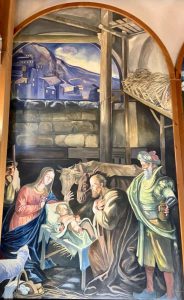
    Nel secondo quadro è raffigurata la capanna di Betlemme illuminata dalla presenza del Bambino ed un borgo montano con le case illuminate in attesa di eventi soprannaturali che segnano il tempo.

    Nel terzo quadro è raffigurata la S. Famiglia che, solitaria, erra per strade di campagna e   Giuseppe in cerca di accoglienza incrocia con lo sguardo una casa sbarrata: ciò sta a ricordare che anche Gesù fu esule. E’ questa una rappresentazione assolutamente attuale in quanto il pensiero va subito su migranti ed esuli di altre terre che arrivano nel nostro paese.

    Nel quarto quadro è raffigurato il ritrovamento di Gesù dodicenne nel tempio. Il messaggio della raffigurazione è la ricerca della verità, i dotti della legge disputavano e non si rendevano conto che la verità era a portata di mano.

    Nel quinto quadro vi è la raffigurazione delle nozze di Cana dove avvenne il primo miracolo di Gesù per implorazione della Madonna.

    Nel sesto quadro vi è la raffigurazione della crocifissione ed in questa tela l’autore si è ispirato ad Antonello da Messina. Alla maniera rinascimentale sono raffigurati anche i committenti, ossia, Padre Pasquale Pasquariello e Padre Nicola Di Rienzo, Superiore del Santuario della Madonna di Carpignano, che con la veste del loro Ordine stanno a confermare la continuità della redenzione tramite la responsabile opera dei ministri di Dio con la ripetizione sull’altare del sacrificio del Calvario.

    Nel settimo quadro vi è la raffigurazione della discesa dello Spirito Santo e tra gli undici apostoli vi è in trono la Vergine. Gli apostoli sono sopra un tavolato al di sotto del quale si intravede la Cattedrale di Ariano Irpino.

    Nell’ottavo quadro è raffigurata l’Assunzione e ad assistere non sono gli apostoli, come nell’Assunta del Tiziano, ma tante persone di varia estrazione che testimoniano, con la fede, la pietà verso la Madonna di Carpignano la cui chiesa  viene riportata nello sfondo a destra; segue una madre irpina con il bambino a rappresentare le donne devote; segue il fanciullo nero davanti a lei per rappresentare gli immigrati extracomunitari. Sono inoltre raffigurati un contadino che rappresenta l’ambiente agricolo in cui si trova il Santuario, un vescovo che rappresenta la chiesa, due militari della Bosnia di quel periodo.

    In conclusione, le otto tele testimoniano non solo l’arte contemporanea a riprova del livello culturale che essa ha raggiunto ma anche per indicare la didattica contenuta nelle rappresentazioni pittoriche ossia la problematica morale e sociale del nostro tempo nel mondo ed in particolare nell’Irpinia.


    M. V.

    Tullio De Franco was born in Foggia in 1934. After abandoning his classical studies, he devoted himself to painting, first attending the artistic high school and then the Academy of Fine Arts in Naples. He taught Painting Disciplines at the 1st Art School in Rome, then Painting at the RUFA Academy of Fine Arts.

    He took part in numerous reviews, art awards and exhibitions, personal and collective, in public spaces and private galleries, in Italy and abroad. For some years he lived in Avellino and Irpinia, leaving numerous works, including the monumental mosaic that decorates the early Christian crypt of the Cathedral of Avellino. He died in Rome in 2011.

    In the Sanctuary of Carpignano there are eight paintings depicting scenes from the life of Mary and Jesus. Specifically, the paintings depict: the Annunciation, the birth of Jesus, the flight from Egypt, the finding of Jesus in the temple, the wedding at Cana , the crucifixion of Jesus, the descent of the Holy Spirit, the assumption of the Virgin.

    The works were commissioned by the Mercedary fathers Pasquale Pasquariello and Nicola Di Rienzo, respectively, father superior and parish priest of the Sanctuary, to decorate the side chapels of the Church after the 1980 earthquake. Subsequently, with the restoration and renewal of the Church, they were placed in the side chapel.

    In the first painting the Virgin is depicted in the foreground in an attitude of humility when the announcement breaks through the apparition of the Archangel Gabriel.

    The second painting depicts the Bethlehem hut illuminated by the presence of the Child and a mountain village with illuminated houses awaiting supernatural events that mark the time.

    In the third picture the Holy Family is depicted which, alone, wanders through country roads and Joseph in search of welcome crosses a barred house with his eyes: this is a reminder that Jesus was an exile too. This is an absolutely current representation as the thought immediately goes to migrants and exiles from other lands arriving in our country.

    The fourth painting depicts the finding of twelve-year-old Jesus in the temple. The message of the representation is the search for the truth, the scholars of the law disputed and did not realize that the truth was at hand.

    In the fifth picture there is the representation of the wedding at Cana where the first miracle of Jesus took place at the request of the Madonna.

    In the sixth painting there is the depiction of the crucifixion and in this canvas the author was inspired by Antonello da Messina. The patrons are also depicted in the Renaissance style, namely, Father Pasquale Pasquariello and Father Nicola Di Rienzo, Superior of the Sanctuary of the Madonna di Carpignano, who with the robe of their Order confirm the continuity of redemption through the responsible work of the ministers of God. with the repetition on the altar of the sacrifice of Calvary.

    In the seventh picture there is the depiction of the descent of the Holy Spirit and the Virgin is enthroned among the eleven apostles. The apostles are on a table below which you can see the Cathedral of Ariano Irpino.

    In the eighth picture the Assumption is depicted and it is not the apostles who assist, as in Titian’s Assumption, but many people of various origins who testify, with faith, to the piety towards the Madonna of Carpignano whose church is brought back to the right background; Then comes an Irpinia mother with her child to represent devoted women; then comes the black boy in front of her to represent non-EU immigrants. Also depicted are a peasant who represents the agricultural environment in which the Sanctuary is located, a bishop who represents the church, two Bosnian soldiers of that period.

    In conclusion, the eight canvases testify not only to contemporary art as proof of the cultural level it has reached but also to indicate the didactics contained in pictorial representations, that is, the moral and social problems of our time in the world and in particular in Irpinia.

    M. V.

  • Copia Sacra Sindone

    italia

    Parrocchia Santuario Maria SS. di Carpignano

    Riproduzione autentica 

    Sacra Sindone

    Sec. XXI

    Stampa su stoffa

    Parish Sanctuary Maria SS. di Carpignano

    Authentic reproduction 

    Holy Shroud

    XXI century

    Printed on fabric
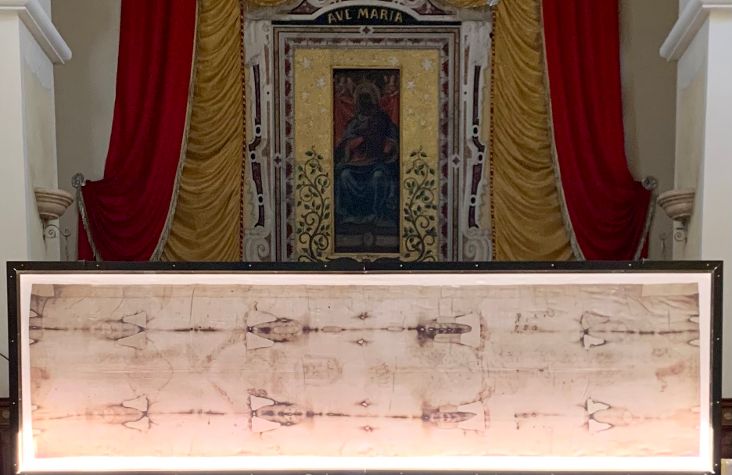
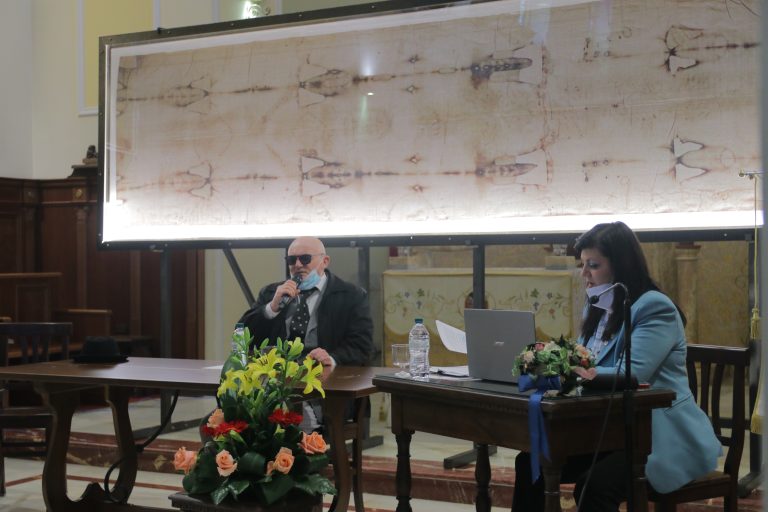
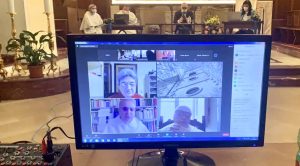
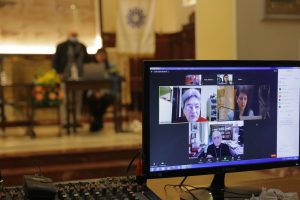
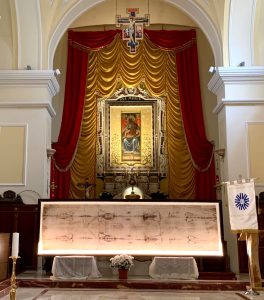
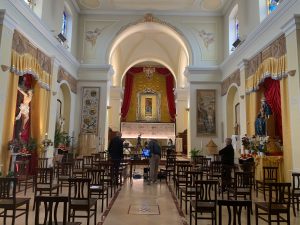
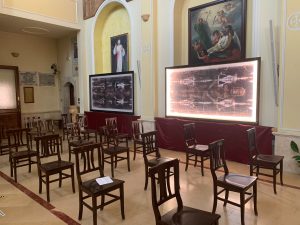
    Del Sacro Telo una copia autentica è stata donata al Santuario di Carpignano da Padre Nicola Boccuzzo, ove dal 5 maggio 2021 è in ostensione permanente. In questa stessa data, per promuoverne la conoscenza e il culto, l’associazione Rotary Community Corps AV Est ha organizzato, in rispetto alle norme anti Covid, una diretta televisiva e zoom indirizzata a numerose scuole di diverso ordine e grado e agli utenti televisivi della regione Campania e non solo, che ha visto come relatrice l’esperta e famosa Sindonologa Dott.ssa Emanuela Marinelli.                                                           

    La Sindone, il mistero che affascina

                                                                                       di Emanuela Marinelli

    www.sindone.info

    La Sindone (dal greco  sindon, lenzuolo) è un lungo telo di lino (442 cm per 113 cm) che ha certamente avvolto il cadavere di un uomo flagellato, coronato di spine, crocifisso con chiodi e trapassato da una lancia al costato. 

    Un’antica tradizione la ritiene il lenzuolo funebre di Gesù Cristo.

    La preziosa reliquia è stata in possesso dei Savoia dal 1453 fino al 1983, quando Umberto II la donò al Papa. Dal 1578 la Sindone è conservata a Torino.

    Le prime notizie storiche certe dell’esistenza di questa reliquia risalgono a metà del XIV secolo, quando Geoffroy de Charny consegnò la Sindone ai canonici di Lirey, presso Troyes, in Francia. Sua moglie, Jeanne de Vergy, era una pronipote di Othon de la Roche, un cavaliere crociato che molto probabilmente la portò via da Costantinopoli durante il saccheggio della IV crociata (1204).

    La Sindone potrebbe essere giunta a Costantinopoli il 16 agosto del 944 proveniente da Edessa (oggi Urfa, nel sud-est della Turchia) con il nome di Mandylion, un panno su cui si riteneva miracolosamente impressa l’immagine di Gesù. Le copie del Mandylion, e in generale tutte le raffigurazioni di Cristo dal IV secolo in poi, sono ispirate alla Sindone. Un’antica tradizione attribuisce a San Giuda Taddeo Apostolo il trasporto da Gerusalemme a Edessa della stoffa con l’impronta di Cristo.

    Nel 1988 la Sindone fu datata con il metodo del Carbonio 14. In base a questa analisi, risalirebbe a un periodo compreso tra il 1260 ed il 1390 d.C. Però le modalità dell’operazione di prelievo, la zona del campionamento e l’attendibilità del metodo per tessuti che hanno attraversato vicissitudini come quelle della Sindone sono ritenute insoddisfacenti da un numero rilevante di studiosi. Nel 2013 tre nuove analisi, condotte presso l’Università di Padova, hanno datato la Sindone all’epoca di Cristo. Si tratta di due datazioni chimiche, basate sulla spettroscopia vibrazionale, e un metodo di datazione meccanico.

    Una recente indagine statistica, basata sui dati ufficiali e sui dati grezzi della datazione del 1988, ha dimostrato che quella conclusione non è affidabile a causa della disomogeneità dei campioni utilizzati. Questi risultati sono stati pubblicati su una rivista dell’Università di Oxford, Archaeometry, nel 2019.

    Molte altre analisi scientifiche avvalorano l’autenticità della Sindone: la grande abbondanza di pollini di provenienza mediorientale e di aloe e mirra; la manifattura rudimentale della stoffa; la presenza di aragonite simile a quella trovata nelle grotte di Gerusalemme; una cucitura laterale identica a quelle esistenti su stoffe ebraiche del primo secolo; cospicue tracce di DNA mediorientale.

    Sulla Sindone è visibile l’impronta in negativo del corpo che vi fu avvolto, oltre alle macchie del suo sangue, che alle analisi è risultato vero sangue umano di gruppo AB, decalcatosi dalle ferite del cadavere in un tempo valutato attorno alle 36-40 ore. L’impronta, dovuta a disidratazione e ossidazione delle fibrille superficiali del lino, si può spiegare solo ammettendo che il corpo abbia emesso una radiazione luminosa. La Sindone ci porta dunque fin sulla soglia del mistero della Resurrezione.

                                                Lettura
                                          della Sindone

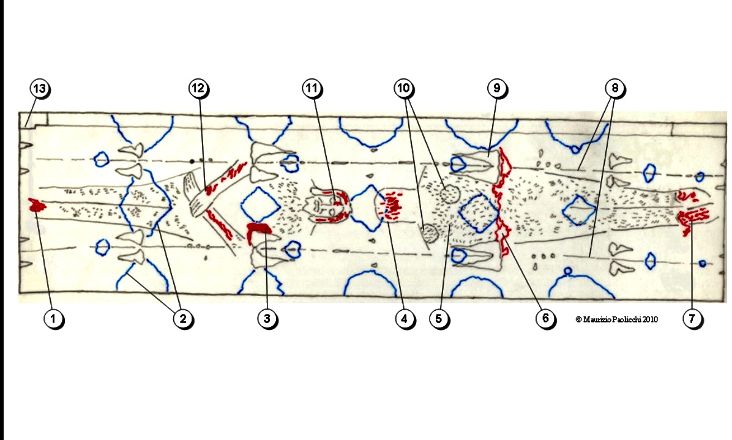
    1.Feritada chiodo al piede destro.    2.Aloni causati da acqua.    3.Ferita da lancia al costato.    4.Ferite da spine alla testa.     5.Colpi di flagello.    6.Colata di sangue nella zona lombare.    7.Ferita da chiodo al piede destro.    8.Linee carbonizzate prodotte dall’incendio del 1532.   9.Fori triangolari prodotti dall’incendio del 1532.   10.Escoriazioni alle spalle dovute al trasporto del patibulum, ovvero la trave orizzontale della croce.   11.Ferite da spine alla fronte.   12.Ferita da chiodo al polso sinistro.   13.Zona del prelievo per la datazione radiocarbonica

    An authentic copy of the Saced Cloth was donated to the Sanctuary of Carpignano by Father Nicola Boccuzzo, where since 5th May 2021 it is inpermanent exhibition. On this same date, to promote the knowledge andworship, the Rotary Community Corps AV Est association organized, incompliance with the anti-Covid regulations, a live television and zoom addressed to numerous schools of different types and levels and to television users in the Campania region and beyond, which has seen as speaker the expert and famous Sindonologist Mrs. Emanuela Marinelli.


    The Shroud, the mystery that fascinates 

    by Emanuela Marinelli

    www.sindone.info 

    The Shroud (from the Greek sindon, sheet) is a linen cloth measuring 442 cm long and 113 cm wide which certainly wrapped the corpse of a scourged man, crowned with thorns, crucified with nails and pierced by a spear at his cost.

    Those who have Christian faith consider it the sheet that wrapped the body of Christ after the deposition from the cross.

    The precious relic remained in the possession of the Savoy dynasty from 1453 until 1983 when Umberto II gave it to the Pope.

    Since 1578 the Shroud has been kept in Turin. 

    The first certain historical information of the existence of this relic dates back to the mid-fourteenth century, when Geoffroy de Charny delivered the Shroud to the canons of Lirey, near Troyes, in France. His wife, Jeanne de Vergy, was a great-granddaughter of Othon de la Roche, a crusader knight who most likely took her away from Constantinople during the sacking of the Fourth Crusade (1204).

    It is believed that the Shroud arrived in Constantinople on August 16th 944 from Edessa (now Urfa, in south-eastern Turkey) with the name of Mandylion, a cloth on which the image of Jesus was thought to have been miraculously impressed.

    In 1988, analyses were carried out on the cloth to attribute a dating and according to the carbon 14 method it would go back to a period between 1260 and 1390 AD.

    The modalities with which this analysis would have been carried out did not fully satisfy a good number of scholars according to whom it would be completely unreliable for the modalities of the sampling operation, for the sampling area, etc. etc.

    In 2013, three new analyses, conducted at the University of Padua, attributed to the Shroud a dating to the time of Christ: these are two chemical dating, based on vibrational spectroscopy, and a mechanical dating method.

     Many other scientific analyses confirm the authenticity of the Shroud due to the great abundance of pollen from the Middle East and aloe and myrrh; for the rudimentary manufacture of cloth; due to the presence of aragonite similar to that found in the caves of Jerusalem; for a side seam identical to those existing on first century Jewish fabrics; notable traces of Middle Eastern DNA.

    On the Shroud you can see the negative imprint of the body that was wrapped in it, in addition to the stains of his blood, which on the analysis turned out to be real human blood of group AB, imprinted from the wounds of the corpse in a time estimated around 36-40 hours. The imprint, due to dehydration and oxidation of the superficial flax fibrils, can only be explained by admitting that the body has emitted light radiation. The Shroud therefore takes us to the threshold of the mystery of the Resurrection. 

                           Reading of the Shroud


     1.  Nail Injury to right foot.  2. Halos caused by water.   3.

    Spear wound in the side.     4.Head thorn injuries.   5.
    Scourge strokes.   6.Blood flow in the lower back.   7.Nail
    wound in right foot.   
    8. Charred lines produced by the fire in 1532.    9.
    Triangular holes produced by the fire in 1532. 
    10. Excoriations on the shoulders
    due to the transport of the patibulum, or the horizontal beam of the
    cross.    11.Injuries from thorns in the
    forehead.   12. Nail wound in left wrist.  
    13. Area of sampling for radiocarbon
    dating. 


  • Presepe Stile Settecentesco

    italia

    Parrocchia Santuario Maria SS. di Carpignano
    Presepe in stile settecentesco

    Sec. XXI

    Parish Sanctuary Maria SS. di Carpignano

    Eighteenth-century style nativity scene

    XXI century   

    Nelle cripte sottostanti il convento è esposto in maniera permanente un presepe in stile settecentesco i cui pastori, delle dimensioni di 30-40 cm di altezza, sono stati lasciati da padre Pasquale Pasquariello in eredità al Santuario di Carpignano.

    Il nucleo originario era composto da 86 statuette ma, con il tempo e grazie all’interessamento di alcuni volontari a Padre Antonio Venuta e Padre Nicola De Rienzo oggi il presepe ne conta più di cento.

    Le scenografie sono state curate da diversi artisti locali, fra cui, i compianti maestri Salvatore Fucci e Franco Penta di Fontanarosa. Il presepe è, oramai, molto conosciuto perché viene frequentemente visitato durante tutto l’anno. Durante le visite guidate il presepe viene descritto nei minimi particolari ed il suo significato simbolico viene narrato attraverso una particolare e singolare catechesi che stimola riflessioni ed introspezioni in chiunque vi assista. 

    Le spiegazioni sono tanto impreziosite da numerosi richiami storici e della tradizione che il visitatore è in grado di individuare da solo scene e personaggi ricollegabili all’antico testamento, alla mitologia greca, alle antiche tradizioni pagane ed alle pagine del Vangelo. 

    Le visite guidate sono a cura di Sonia Apollonia Bruno, non solo volontaria ma tra gli artisti responsabili del presepe.

    S.B.

    In the crypts below the convent there is a permanent eighteenth-century style nativity scene whose shepherds, 30-40 cm high, were left by Father Pasquale Pasquariello as an inheritance to the Sanctuary of Carpignano.

    The original nucleus was made up of 86 statuettes but, over time and thanks to the interest of some volunteers in Father Antonio Venuta and Father Nicola De Rienzo, today the crib has more than a hundred.

    The sets were designed by various local artists, including the late masters Salvatore Fucci and Franco Penta di Fontanarosa. The nativity scene is now very well-known because it is frequently visited throughout the year. During the guided tours, the nativity scene is described in great detail and its symbolic meaning is narrated through a particular and singular catechesis that stimulates reflections and introspections in anyone who attends it.

    The explanations are so embellished with numerous historical and traditional references that the visitor is able to identify scenes and characters on his own that can be linked to the Old Testament, Greek mythology, ancient pagan traditions and the pages of the Gospel.

    The guided tours are organized by Sonia Apollonia Bruno, not only voluntary but among the artists responsible for the nativity scene.

  • App-Art ricorda il Maestro Salvatore Fucci
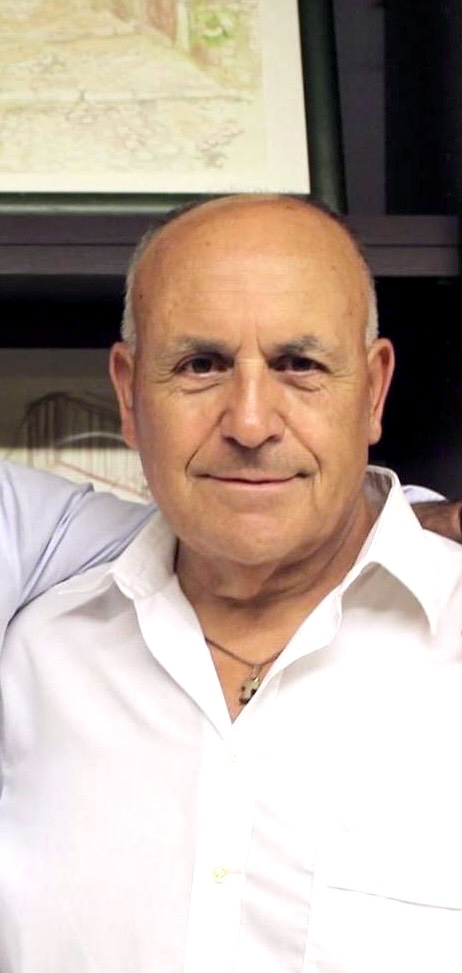
    Il Rotary Community Corps Avellino Est dedica questo lavoro di ricerca, studio e divulgazione delle opere presenti all’interno del Santuario di Carpignano alla memoria del Maestro  Salvatore Fucci, che con la maestria della sua arte ha fortemente contribuito  ad impreziosirne le persone e i luoghi. Salvatore nasce nel vicino comune di Fontanarosa, nel 1949. Si sposa nel 1981 con Stella, da cui avrà tre figli, Giuseppe, Antonio e Giovanni.
    Pur lavorando nell’ambito amministrativo della scuola, Salvatore non abbandona mai la sua passione per l’arte. Negli anni ‘70 si avvicina al  mondo della pittura, per poi appassionarsi anche alla scultura, alla musica e al teatro.
    Con i ragazzi del suo paese, Fontanarosa, Salvatore diviene promotore e organizzatore, per diversi anni, di commedie carnevalesche, occupandosi in prima persona della regia e della scenografia. 
    La passione per la scenografia lo porta poi a svariare collaborazioni, anche per spettacoli di alcune importanti scuole di danza locali. Nel corso della sua vita Salvatore supporta con idee e soprattutto con lavoro pratico numerosissime iniziative culturali e religiose della sua terra, divenendo anche insegnante di  corsi di pittura in alcuni istituti penitenziari e  case di accoglienza. 
    All’inizio del nuovo millennio, Salvatore si avvicina alla realtà mercedaria e s’innamora perdutamente di Carpignano e del suo Santuario, per il quale realizzerà numerose opere, tra cui un pannello ligneo raffigurante il ritrovamento del quadro della Madonna (2001), le sculture del portale principale e la via Crucis che decora l’aula della chiesa.  
    Sempre a Carpignano si avvicina alla catechesi, donando il suo tempo e la sua competenza a tanti giovani e occupandosi con dedizione della realizzazione dello spettacolo della  Via Crucis. Nel 2015 realizza e allestisce  il prezioso presepe settecentesco permanente nelle cripte del Santuario. 
    Successivamente, prima come socio e poi come presidente, presterà volontariato al carcere di Ariano Irpino con l’associazione ‘Liberi per liberare”. 
    Nel 2019, per il suo distinto operato ed esempio di fede, Salvatore  viene insignito del titolo di “Fratello Maggiore” della Beata Vergine Maria della Mercede.
    Muore a Fontanarosa nel 2020.

    The Rotary Community Corps Avellino Est dedicates this work of research, study and dissemination of the works present within the Sanctuary of Carpignano in memory of the Master Salvatore Fucci, who with the mastery of his art has strongly contributed to embellish people and places. Salvatore was born in the
    nearby town of Fontanarosa in 1949. He married Stella in 1981, with whom he had three children, Giuseppe, Antonio and Giovanni.

    While working in the administrative area of the school, Salvatore
    never leaves his passion for art. In the 70s he approaches the world of
    painting, and then also becomes passionate about sculpture, music and theater.

    With the boys of his village, Fontanarosa, Salvatore becomes a promoter
    and organizer, for several years, of carnival comedies, dealing personally withthe direction and set design.
    The passion for scenography then leads him to various collaborations, also for shows of some important local dance schools. Throughout his life Salvatore supports numerous cultural initiatives with ideas and above all with practical work religious of his land, also becoming a teacher of paintingcourses in some institutes prisons and shelters.

    At the beginning of the new millennium, Salvatore approaches the
    mercedary reality and falls in love hopelessly of Carpignano and its Sanctuary, for which he will create numerous works, including a wooden panel depicting the discovery of the painting of the Madonna (2001), the sculptures of the main portal and the Via Crucis that decorates the church hall. 
    Still in Carpignano he approaches catechesis, giving his time and his competence to many young people and dealing with dedication to the realization of the show of the Via Crucis. In 2015 he created and set up the precious permanenteighteenth-century nativity scene in the crypts of the Sanctuary.

    Subsequently, first as a member and then as president, he will volunteer
    at the Ariano Irpino prison with the ‘Liberi per liberare’association. 
    In 2019, for his distinguished work and example of faith, Salvatore was

    awarded the title of Elder Brother of the Blessed Virgin Mary of Mercy’.


    He died in Fontanarosa in 2020.