APP-ART

  • Sant’Antonio da Padova

    Chiesa di S. Maria Maggiore
    Dipinto
    Sant’Antonio da Padova
    Sec. XVIII
    Olio su tela
    Ambito culturale campano

Church of S. Maria Maggiore
Painting
Saint Anthony of Padua
XVIII century
Oil painting on canvas
Campania cultural area

La tela è parte di una serie di opere scomparse dalla chiesa alla fine anni ’40 del Novecento ritrovate e riportate a Grottaminarda solo nel gennaio 1994. 
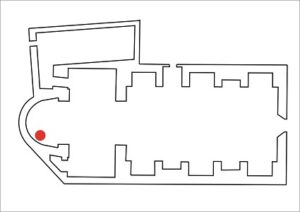
Non è nota la collocazione originaria del dipinto, ma solo che insieme al “San Michele” e alla “S. Teresa”, durante i primi decenni del Novecento, erano conservate in una delle cappelle laterali della navata. Successivamente dopo i restauri voluti dall’arciprete Alfonso Maria Cogliani, le opere vennero trasferite prima nella casa canonica e poi in sagrestia. 
Non si hanno notizie documentate sulla committenza, tuttavia l’opera in basso a destra, riporta lo stemma combinato della famiglia Coscia e Visconti, sui cui è poggiato un cappello prelatizio. Questo elemento testimonia che l’opera fu commissionata da un ecclesiastico appartenente alla famiglia Coscia-Visconti. 
L’opera raffigura Sant’Antonio che riceve l’apparizione del Bambin Gesù.

The canvas is part of a series of works that disappeared from the church in the late 1940s, which were found and brought back to Grottaminarda only in January 1994.
The original location of the painting is not known, but only that together with the “San Michele” and the “S. Teresa”, during the first decades of the twentieth century, were kept in one of the side chapels of the nave. Subsequently after the restorations commissioned by the archpriest Alfonso Maria Cogliani, the works were transferred first to the canonical house and then to the sacristy.
There is no documented information on the client, however the work at the bottom right, shows the combined coat of arms of the Coscia and Visconti family, on which a prelatic hat rests. This element testifies that the work was commissioned by an ecclesiastic belonging to the Coscia-Visconti family.
The work depicts Saint Anthony receiving the apparition of the Infant Jesus.

S. antonio tela
grotta antonio tela

italia

Chiesa di S. Maria Maggiore
Dipinto
Sant’Antonio da Padova
Sec. XVIII
Olio su tela
Ambito culturale campano

Church of S. Maria Maggiore
Painting
Saint Anthony of Padua
XVIII century
Oil painting on canvas
Campania cultural area
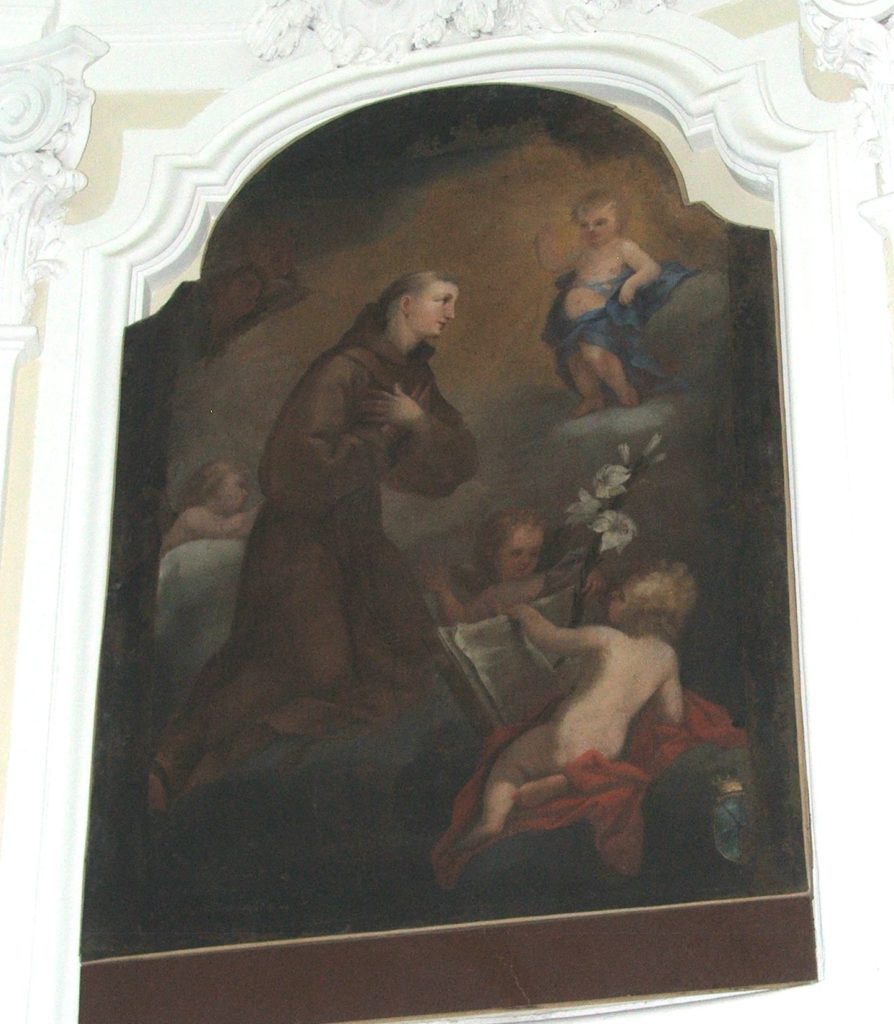
La tela è parte di una serie di opere scomparse dalla chiesa alla fine anni ’40 del Novecento ritrovate e riportate a Grottaminarda solo nel gennaio 1994. 
Non è nota la collocazione originaria del dipinto, ma solo che insieme al “San Michele” e alla “S. Teresa”, durante i primi decenni del Novecento, erano conservate in una delle cappelle laterali della navata. Successivamente dopo i restauri voluti dall’arciprete Alfonso Maria Cogliani, le opere vennero trasferite prima nella casa canonica e poi in sagrestia. 
Non si hanno notizie documentate sulla committenza, tuttavia l’opera in basso a destra, riporta lo stemma combinato della famiglia Coscia e Visconti, sui cui è poggiato un cappello prelatizio. Questo elemento testimonia che l’opera fu commissionata da un ecclesiastico appartenente alla famiglia Coscia-Visconti. 
L’opera raffigura Sant’Antonio che riceve l’apparizione del Bambin Gesù.

The canvas is part of a series of works that disappeared from the church in the late 1940s, which were found and brought back to Grottaminarda only in January 1994.
The original location of the painting is not known, but only that together with the “San Michele” and the “S. Teresa”, during the first decades of the twentieth century, were kept in one of the side chapels of the nave. Subsequently after the restorations commissioned by the archpriest Alfonso Maria Cogliani, the works were transferred first to the canonical house and then to the sacristy.
There is no documented information on the client, however the work at the bottom right, shows the combined coat of arms of the Coscia and Visconti family, on which a prelatic hat rests. This element testifies that the work was commissioned by an ecclesiastic belonging to the Coscia-Visconti family.
The work depicts Saint Anthony receiving the apparition of the Infant Jesus.

S. antonio tela
Leggi tutto
  • Sant’Agostino d’Ippona

    Chiesa di S. Maria Maggiore
    Dipinto 
    Matteo Vigilante 
    Sant’Agostino d’Ippona
    Sec. XVIII (seconda metà)
    Olio su tela

    Church of S. Maria Maggiore
    Painting
    Matteo Vigilante
    Saint Augustine of Hippo
    18th century (second half)
    Oil painting on canvas

    La tela, insieme ad oltre otto opere scomparse dalla chiesa alla fine degli anni ’40 del Novecento, finì sul mercato dell’antiquariato romano ed è stata ritrovata e riportata a Grottaminarda solo nel gennaio 1994.
    L’opera venne realizzata verso la fine del Settecento da Matteo Vigilante, che realizzò, per la Chiesa di S. Maria Maggiore, oltre ai tre affreschi dell’“Assunzione della Vergine”, “Ester ed Assuero” e il perduto “Giuditta ed Oloferne”, le tele: “San Gregorio Magno”, “Sant’Ambrogio” e “San Girolamo nello studio”, i quattro ovali con gli angeli e l’affresco della Sacrestia vecchia.
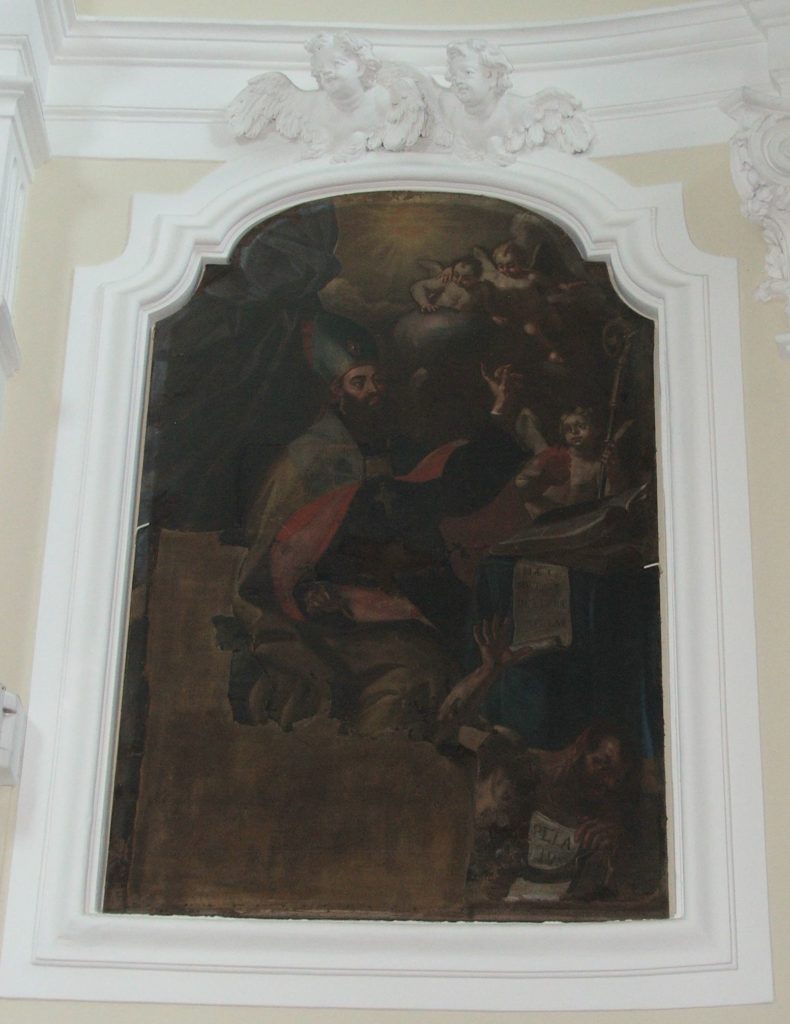
    Sant’Agostino è raffigurato seduto ad uno scrittoio, circondato da angeli. In basso sulla destra è dipinto un essere demoniaco che reca in mano gli scritti di Pelagio, l’eretico con cui Sant’Agostino s’impegnò in una lunga battaglia dottrinaria.

    The canvas, together with over eight works that disappeared from the church in the late 1940s, ended up on the Roman antiques market and was found and brought back to Grottaminarda only in January 1994.
    The work was carried out towards the end of the eighteenth century by Matteo Vigilante, who made, for the Church of S. Maria Maggiore, in addition to the three frescoes of the “Assumption of the Virgin“, “Esther and Ahasuerus” and the lost “Giuditta and Holofernes “, The paintings:” San Gregorio Magno “,” Sant’Ambrogio “and” San Girolamo nella studio “, the four ovals with angels and the fresco of the old sacristy.
    Saint Augustine is depicted seated at a desk surrounded by angels. On the bottom right is a demonic being holding the writings of Pelagius, the heretic with whom St. Augustine engaged in a long doctrinaire battle.

    grotta agostino

    italia

    Chiesa di S. Maria Maggiore
    Dipinto 
    Matteo Vigilante 
    Sant’Agostino d’Ippona
    Sec. XVIII (seconda metà)
    Olio su tela

    Church of S. Maria Maggiore
    Painting
    Matteo Vigilante
    Saint Augustine of Hippo
    18th century (second half)
    Oil painting on canvas

    La tela, insieme ad oltre otto opere scomparse dalla chiesa alla fine degli anni ’40 del Novecento, finì sul mercato dell’antiquariato romano ed è stata ritrovata e riportata a Grottaminarda solo nel gennaio 1994.
    L’opera venne realizzata verso la fine del Settecento da Matteo Vigilante, che realizzò, per la Chiesa di S. Maria Maggiore, oltre ai tre affreschi dell’“Assunzione della Vergine”, “Ester ed Assuero” e il perduto “Giuditta ed Oloferne”, le tele: “San Gregorio Magno”, “Sant’Ambrogio” e “San Girolamo nello studio”, i quattro ovali con gli angeli e l’affresco della Sacrestia vecchia.
    Sant’Agostino è raffigurato seduto ad uno scrittoio, circondato da angeli. In basso sulla destra è dipinto un essere demoniaco che reca in mano gli scritti di Pelagio, l’eretico con cui Sant’Agostino s’impegnò in una lunga battaglia dottrinaria.

    The canvas, together with over eight works that disappeared from the church in the late 1940s, ended up on the Roman antiques market and was found and brought back to Grottaminarda only in January 1994.
    The work was carried out towards the end of the eighteenth century by Matteo Vigilante, who made, for the Church of S. Maria Maggiore, in addition to the three frescoes of the “Assumption of the Virgin“, “Esther and Ahasuerus” and the lost “Giuditta and Holofernes “, The paintings:” San Gregorio Magno “,” Sant’Ambrogio “and” San Girolamo nella studio “, the four ovals with angels and the fresco of the old sacristy.
    Saint Augustine is depicted seated at a desk surrounded by angels. On the bottom right is a demonic being holding the writings of Pelagius, the heretic with whom St. Augustine engaged in a long doctrinaire battle.

  • Ester e Assuero

    Chiesa di S. Maria Maggiore
    Dipinto
    Matteo Vigilante
    Ester e Assuero
    Sec. XVIII (dat. 1768)
    Affresco

    Church of S. Maria Maggiore
    Painting
    Matteo  Vigilante
    Esther and Ahasuerus
    18th century (date 1768)
    Fresco

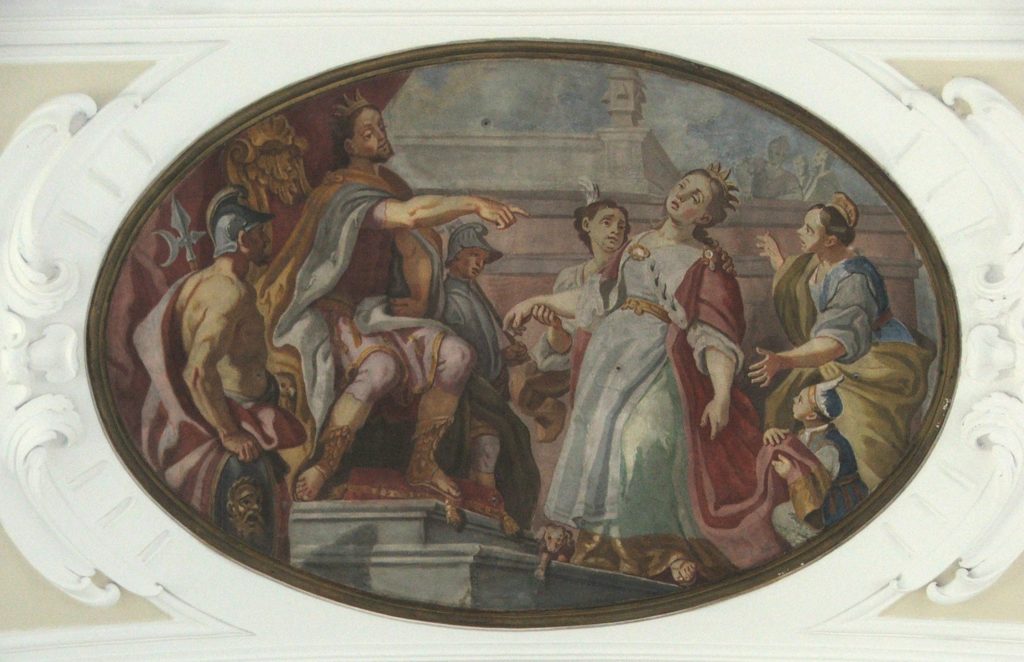
    Il dipinto ad affresco, opera di Matteo Vigilante, pittore di origine solofrana, rappresenta la scena biblica dell’incontro di Ester e Assuero dopo l’editto contro gli ebrei.
    Ester, una giovane ebrea deportata da Gerusalemme durante l’invasione di Nabucodonosor , re di Babilonia, orfana di padre e di madre, è adottata come figlia dal cugino Mardocheo. Il re Assuero, passato alla storia con il nome di Serse I, il potentissimo re persiano che regnava dall’India fino all’Etiopia “sopra centoventisette province”, cerca una moglie tra le ragazze del suo regno. Vengono radunate tutte le vergini nel palazzo di Susa e tra queste Ester che sarà la prescelta. Allora il nuovo primo ministro di Assuero, Amàn, esige che ognuno si prostri dinanzi al re Assuero. Mardocheo rifiuta, perché un ebreo si genuflette solo davanti al suo Dio. Il ministro diviene furioso e convince il re ad emettere un editto reale con l’ordine di sterminare gli ebrei.
    Ester, la promessa sposa, deve intercedere presso il re per il suo popolo. Dopo tre giorni di preghiera, indossa abiti sontuosi e, accompagnata da due ancelle, si dirige dal re.
    Il dipinto rappresenta proprio questo incontro, che così viene descritto nei testi biblici: “Egli è seduto sul trono regale … con un aspetto molto terribile. Alza il viso splendente di maestà e guarda in un accesso di collera. La regina si sente svenire … e poggia la testa sull’ancella che l’accompagnava”.
    La vicenda si completa con il matrimonio tra Ester e Assuero e il popolo ebraico viene liberato.
    Il dipinto è ispirato ad un’opera di Paolo Di Maio, maestro del Vigilante. Le due raffigurazioni sono pressoché identiche con l’aggiunta di alcuni particolari che si ritrovano spesso nell’opera pittorica del Vigilante, il cagnolino ai piedi del Re, e soprattutto la quinta scenografica della città murata e turrita.

    The fresco painting, by Matteo Vigilante, a painter of Solofrana origin, represents the biblical scene of the meeting of Esther and Ahasuerus after the edict against the Jews.
    Esther, a young Jewish woman deported from Jerusalem during the invasion of Nebuchadnezzar, king of Babylon, an orphan of father and mother, is adopted as a daughter by her cousin Mordecai. King Ahasuerus, who went down in history with the name of Xerxes I, the very powerful Persian king who reigned from India to Ethiopia “over one hundred and twenty-seven provinces”, is looking for a wife among the girls of his kingdom. All the virgins are gathered in the palace of Susa and among these Esther who will be the chosen one. Then the new prime minister of Ahasuerus, Aman, demands that everyone prostrate himself before king Ahasuerus. Mordecai refuses, because a Jew genuflects only before his God. The minister becomes furious and convinces the king to issue a royal edict with the order to exterminate the Jews.
    Esther, the betrothed, must intercede with the king for his people. After three days of prayer, she wears sumptuous clothes and, accompanied by two maidservants, heads to the king.
    The painting represents precisely this encounter, which is thus described in the biblical texts: “He is seated on the royal throne … with a very terrible aspect. He raises his face resplendent with majesty and looks with a fit of anger. The queen feels faint … and rests her head on the handmaid who accompanied her”.
    The story is completed with the marriage between Esther and Ahasuerus and the Jewish people are freed.
    The painting is inspired by a work by Paolo Di Maio, master of the Vigilante. The two representations are almost identical with the addition of some details that are often found in the pictorial work of the Vigilante, the dog at the King’s feet, and above all the scenographic backdrop of the walled and turreted city.

    grotta ester

    italia

    Chiesa di S. Maria Maggiore
    Dipinto
    Matteo Vigilante
    Ester e Assuero
    Sec. XVIII (dat. 1768)
    Affresco

    Church of S. Maria Maggiore
    Painting
    Matteo  Vigilante
    Esther and Ahasuerus
    18th century (date 1768)
    Fresco

    Il dipinto ad affresco, opera di Matteo Vigilante, pittore di origine solofrana, rappresenta la scena biblica dell’incontro di Ester e Assuero dopo l’editto contro gli ebrei.
    Ester, una giovane ebrea deportata da Gerusalemme durante l’invasione di Nabucodonosor , re di Babilonia, orfana di padre e di madre, è adottata come figlia dal cugino Mardocheo. Il re Assuero, passato alla storia con il nome di Serse I, il potentissimo re persiano che regnava dall’India fino all’Etiopia “sopra centoventisette province”, cerca una moglie tra le ragazze del suo regno. Vengono radunate tutte le vergini nel palazzo di Susa e tra queste Ester che sarà la prescelta. Allora il nuovo primo ministro di Assuero, Amàn, esige che ognuno si prostri dinanzi al re Assuero. Mardocheo rifiuta, perché un ebreo si genuflette solo davanti al suo Dio. Il ministro diviene furioso e convince il re ad emettere un editto reale con l’ordine di sterminare gli ebrei.
    Ester, la promessa sposa, deve intercedere presso il re per il suo popolo. Dopo tre giorni di preghiera, indossa abiti sontuosi e, accompagnata da due ancelle, si dirige dal re.
    Il dipinto rappresenta proprio questo incontro, che così viene descritto nei testi biblici: “Egli è seduto sul trono regale … con un aspetto molto terribile. Alza il viso splendente di maestà e guarda in un accesso di collera. La regina si sente svenire … e poggia la testa sull’ancella che l’accompagnava”.
    La vicenda si completa con il matrimonio tra Ester e Assuero e il popolo ebraico viene liberato.
    Il dipinto è ispirato ad un’opera di Paolo Di Maio, maestro del Vigilante. Le due raffigurazioni sono pressoché identiche con l’aggiunta di alcuni particolari che si ritrovano spesso nell’opera pittorica del Vigilante, il cagnolino ai piedi del Re, e soprattutto la quinta scenografica della città murata e turrita.

    The fresco painting, by Matteo Vigilante, a painter of Solofrana origin, represents the biblical scene of the meeting of Esther and Ahasuerus after the edict against the Jews.
    Esther, a young Jewish woman deported from Jerusalem during the invasion of Nebuchadnezzar, king of Babylon, an orphan of father and mother, is adopted as a daughter by her cousin Mordecai. King Ahasuerus, who went down in history with the name of Xerxes I, the very powerful Persian king who reigned from India to Ethiopia “over one hundred and twenty-seven provinces”, is looking for a wife among the girls of his kingdom. All the virgins are gathered in the palace of Susa and among these Esther who will be the chosen one. Then the new prime minister of Ahasuerus, Aman, demands that everyone prostrate himself before king Ahasuerus. Mordecai refuses, because a Jew genuflects only before his God. The minister becomes furious and convinces the king to issue a royal edict with the order to exterminate the Jews.
    Esther, the betrothed, must intercede with the king for his people. After three days of prayer, she wears sumptuous clothes and, accompanied by two maidservants, heads to the king.
    The painting represents precisely this encounter, which is thus described in the biblical texts: “He is seated on the royal throne … with a very terrible aspect. He raises his face resplendent with majesty and looks with a fit of anger. The queen feels faint … and rests her head on the handmaid who accompanied her”.
    The story is completed with the marriage between Esther and Ahasuerus and the Jewish people are freed.
    The painting is inspired by a work by Paolo Di Maio, master of the Vigilante. The two representations are almost identical with the addition of some details that are often found in the pictorial work of the Vigilante, the dog at the King’s feet, and above all the scenographic backdrop of the walled and turreted city.

  • Assunzione della Madonna

    Chiesa di S. Maria Maggiore
    Dipinto
    Matteo Vigilante
    Assunzione della Madonna 
    Sec. XVIII (dat. 1768)
    Affresco

    Church of S. Maria Maggiore
    Painting
    Matteo Vigilante
    Assumption of the Madonna
    18th century (date 1768)
    Fresco

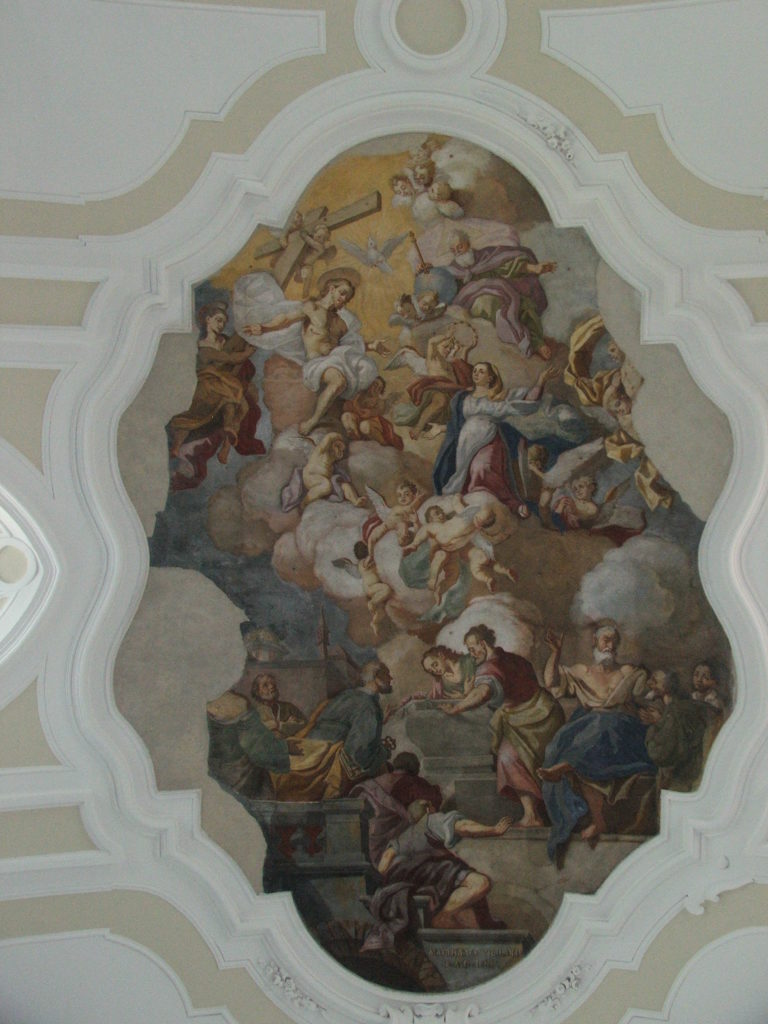
    Il dipinto ad affresco, opera di Matteo Vigilante, pittore di origine solofrana, rappresenta l’Assunzione e l’Incoronazione di Maria Vergine.
    Maria è appena stata deposta nel sepolcro e il suo corpo viene assunto in cielo, dove la SS. Trinità l’aspetta per incoronarla. 
    La scena è divisa in due parti: una parte inferiore dove è rappresentata l’umanità carnale, terrena, con la veduta di una città turrita, la tomba di Maria circondata dagli postoli, il pittore Vigilante e l’arciprete Pietro Antonio Perillo, committente e coordinatore della fabbrica della ricostruzione della Chiesa settecentesca. Nella parte superiore è raffigurato il divino, lo spirituale: in uno sfondo composto da nuvole, angeli e putti, riconosciamo quasi a fatica Maria, suo Figlio, Dio Padre e lo Spirito Santo, in forma di colomba.
    La scena non compare nei Vangeli ma viene ripresa da alcuni testi apocrifi, dove si parla della “dormitio Virginis”, intesa anche come sonno, riposo, passaggio, seppellimento e nascita al cielo, momenti ai quali seguono la resurrezione, l’elevazione al cielo e l’incoronazione.

    The fresco painting, by Matteo Vigilante, a painter of Solofrana origin, represents the Assumption and Coronation of the Virgin Mary.
    Maria has just been deposed in the sepulcher and her body is taken to heaven, where the SS. Trinity waits for her to crown her.
    The scene is divided into two parts: a lower part where carnal, earthly humanity is represented, with a view of a towered city, the tomb of Mary surrounded by the apostles, the painter Vigilante and the archpriest Pietro Antonio Perillo, client and coordinator of the factory for the reconstruction of the eighteenth-century church. The upper part shows the divine, the spiritual: in a background made up of clouds, angels and cherubs, we almost hardly recognize Mary, her Son, God the Father and the Holy Spirit, in the form of a dove.
    The scene does not appear in the Gospels but is taken from some apocryphal texts, where we speak of the “dormitio Virginis”, also understood as sleep, rest, passage, burial and birth to heaven, moments followed by resurrection, elevation to heaven and the coronation.

    Assunzione di Maria
    grotta assunzione

    italia

    Chiesa di S. Maria Maggiore
    Dipinto
    Matteo Vigilante
    Assunzione della Madonna 
    Sec. XVIII (dat. 1768)
    Affresco

    Church of S. Maria Maggiore
    Painting
    Matteo Vigilante
    Assumption of the Madonna
    18th century (date 1768)
    Fresco

    Il dipinto ad affresco, opera di Matteo Vigilante, pittore di origine solofrana, rappresenta l’Assunzione e l’Incoronazione di Maria Vergine.
    Maria è appena stata deposta nel sepolcro e il suo corpo viene assunto in cielo, dove la SS. Trinità l’aspetta per incoronarla. 
    La scena è divisa in due parti: una parte inferiore dove è rappresentata l’umanità carnale, terrena, con la veduta di una città turrita, la tomba di Maria circondata dagli postoli, il pittore Vigilante e l’arciprete Pietro Antonio Perillo, committente e coordinatore della fabbrica della ricostruzione della Chiesa settecentesca. Nella parte superiore è raffigurato il divino, lo spirituale: in uno sfondo composto da nuvole, angeli e putti, riconosciamo quasi a fatica Maria, suo Figlio, Dio Padre e lo Spirito Santo, in forma di colomba.
    La scena non compare nei Vangeli ma viene ripresa da alcuni testi apocrifi, dove si parla della “dormitio Virginis”, intesa anche come sonno, riposo, passaggio, seppellimento e nascita al cielo, momenti ai quali seguono la resurrezione, l’elevazione al cielo e l’incoronazione.

    The fresco painting, by Matteo Vigilante, a painter of Solofrana origin, represents the Assumption and Coronation of the Virgin Mary.
    Maria has just been deposed in the sepulcher and her body is taken to heaven, where the SS. Trinity waits for her to crown her.
    The scene is divided into two parts: a lower part where carnal, earthly humanity is represented, with a view of a towered city, the tomb of Mary surrounded by the apostles, the painter Vigilante and the archpriest Pietro Antonio Perillo, client and coordinator of the factory for the reconstruction of the eighteenth-century church. The upper part shows the divine, the spiritual: in a background made up of clouds, angels and cherubs, we almost hardly recognize Mary, her Son, God the Father and the Holy Spirit, in the form of a dove.
    The scene does not appear in the Gospels but is taken from some apocryphal texts, where we speak of the “dormitio Virginis”, also understood as sleep, rest, passage, burial and birth to heaven, moments followed by resurrection, elevation to heaven and the coronation.

    Assunzione di Maria
  • San Tommaso d’Aquino e San Giacomo il Maggiore in adorazione dell’Eucaristia

    Chiesa di S. Maria Maggiore
    Dipinto 
    Antonio e Giovanni Sarnelli (attr.)
    San Tommaso d’Aquino e San Giacomo il Maggiore in adorazione dell’Eucaristia
    Sec. XVIII (1766 c.a)
    Olio su tela

    Church of S. Maria Maggiore
    Painting
    Matteo (or Tommaso) Vigilante
    Cherub with palm tree and medallion
    18th century (second half)
    Oil painting on canvas

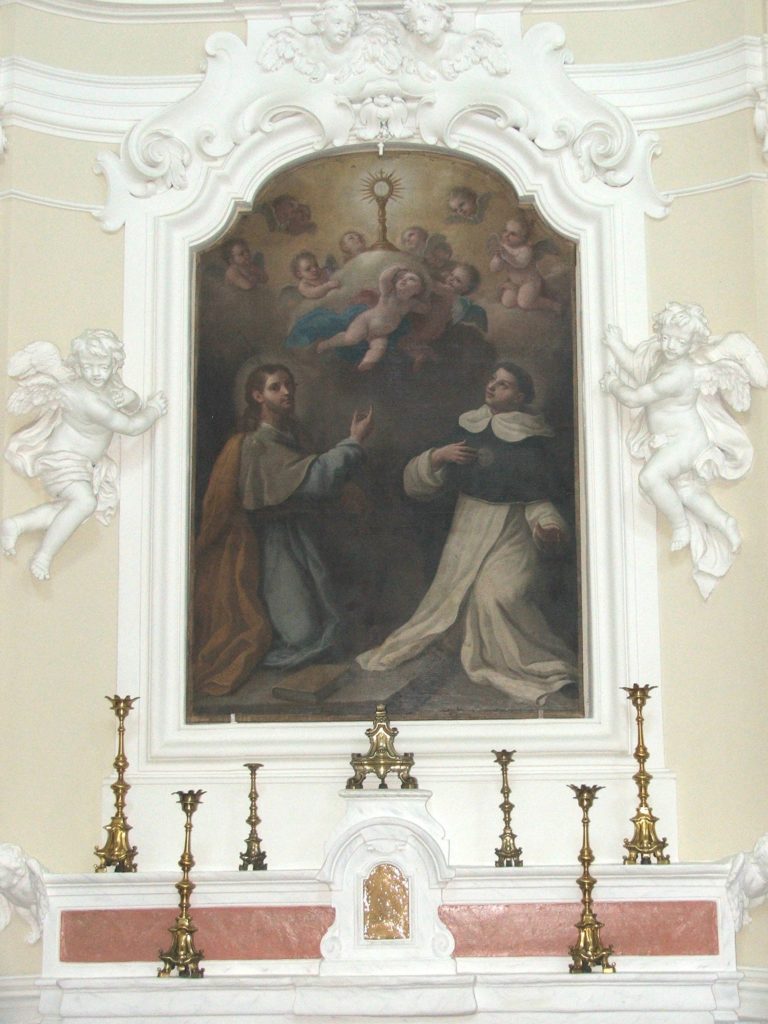
    È possibile ipotizzare la datazione e l’attribuzione ai Sarnelli di questa opera dal raffronto con la tela dell’Immacolata, firmata e datata “Sarnelli 1766”. La famiglia Sarnelli, pittori napoletani che operarono per tutto il XVIII secolo, ebbe come capostipite Onofrio Sarnelli (1669 ca-1752) che prese in moglie Angela Viola (1677 ca. – 1752). 
    I figli Gennaro (1704ca-1731), (Domenico) Antonio (1712-1800) e Giovanni (1714-1793) intrapresero la carriera di pittori formandosi nel laboratorio di Paolo De Matteis, di cui riproposero molte opere. Dopo la morte di Gennaro, Antonio e Giovanni lavorarono spesso insieme e firmarono le opere indicando il loro cognome e l’anno di realizzazione dell’opera.
    La tela presenta una costruzione piramidale e la scena si divide in due parti. Nella parte superiore ritroviamo schiere di angeli che aleggiano intorno all’ostensorio. Nella parte bassa, a sinistra, abbiamo San Giacomo con lo sguardo rivolto verso gli spettatori, con la mano destra indica il Santissimo; a destra è raffigurato San Tommaso in contemplazione verso l’Ostia Santa.
    I due santi sono riconoscibili per alcuni attributi iconografici: San Giacomo per il bastone, il sanrocchino, la mantella dei pellegrini, e la conchiglia; San Tommaso d’Aquino, per l’abito proprio dei domenicani e per il sole raggiato sul petto. 

    It is possible to hypothesize the dating and attribution to Sarnelli of this work by comparison with the canvas of the “Immaculate Conception“, signed and dated “Sarnelli 1766“. The Sarnelli family, Neapolitan painters who worked throughout the eighteenth century, had Onofrio Sarnelli (1669 ca-1752) as the progenitor who took Angela Viola (1677 – 1752) as wife.
    The sons Gennaro (1704ca-1731), (Domenico) Antonio (1712-1800) and Giovanni (1714-1793) embarked on the career of painters by training in the laboratory of Paolo De Matteis, of which they reproduced many works. After Gennaro’s death, Antonio and Giovanni often worked together and signed the works indicating their surname and year of construction.
    The canvas has a pyramidal construction and the scene is divided into two parts. In the upper part we find rows of angels hovering around the monstrance. In the lower part, on the left, we have San Giacomo with his gaze turned towards the spectators, with his right hand he indicates the Blessed Sacrament; on the right Saint Thomas is portrayed in contemplation towards the Holy Host.
    The two saints are recognizable by some iconographic attributes: San Giacomo for the staff, the Sanrocchino, the pilgrims’ cape, and the shell; San Tommaso d’Aquino, for the Dominican habit and for the sun on the chest.

    Grotta tommaso e giacomo

    italia

    Chiesa di S. Maria Maggiore
    Dipinto 
    Antonio e Giovanni Sarnelli (attr.)
    San Tommaso d’Aquino e San Giacomo il Maggiore in adorazione dell’Eucaristia
    Sec. XVIII (1766 c.a)
    Olio su tela

    Church of S. Maria Maggiore
    Painting
    Matteo (or Tommaso) Vigilante
    Cherub with palm tree and medallion
    18th century (second half)
    Oil painting on canvas

    È possibile ipotizzare la datazione e l’attribuzione ai Sarnelli di questa opera dal raffronto con la tela dell’Immacolata, firmata e datata “Sarnelli 1766”. La famiglia Sarnelli, pittori napoletani che operarono per tutto il XVIII secolo, ebbe come capostipite Onofrio Sarnelli (1669 ca-1752) che prese in moglie Angela Viola (1677 ca. – 1752). 
    I figli Gennaro (1704ca-1731), (Domenico) Antonio (1712-1800) e Giovanni (1714-1793) intrapresero la carriera di pittori formandosi nel laboratorio di Paolo De Matteis, di cui riproposero molte opere. Dopo la morte di Gennaro, Antonio e Giovanni lavorarono spesso insieme e firmarono le opere indicando il loro cognome e l’anno di realizzazione dell’opera.
    La tela presenta una costruzione piramidale e la scena si divide in due parti. Nella parte superiore ritroviamo schiere di angeli che aleggiano intorno all’ostensorio. Nella parte bassa, a sinistra, abbiamo San Giacomo con lo sguardo rivolto verso gli spettatori, con la mano destra indica il Santissimo; a destra è raffigurato San Tommaso in contemplazione verso l’Ostia Santa.
    I due santi sono riconoscibili per alcuni attributi iconografici: San Giacomo per il bastone, il sanrocchino, la mantella dei pellegrini, e la conchiglia; San Tommaso d’Aquino, per l’abito proprio dei domenicani e per il sole raggiato sul petto. 

    It is possible to hypothesize the dating and attribution to Sarnelli of this work by comparison with the canvas of the “Immaculate Conception“, signed and dated “Sarnelli 1766“. The Sarnelli family, Neapolitan painters who worked throughout the eighteenth century, had Onofrio Sarnelli (1669 ca-1752) as the progenitor who took Angela Viola (1677 – 1752) as wife.
    The sons Gennaro (1704ca-1731), (Domenico) Antonio (1712-1800) and Giovanni (1714-1793) embarked on the career of painters by training in the laboratory of Paolo De Matteis, of which they reproduced many works. After Gennaro’s death, Antonio and Giovanni often worked together and signed the works indicating their surname and year of construction.
    The canvas has a pyramidal construction and the scene is divided into two parts. In the upper part we find rows of angels hovering around the monstrance. In the lower part, on the left, we have San Giacomo with his gaze turned towards the spectators, with his right hand he indicates the Blessed Sacrament; on the right Saint Thomas is portrayed in contemplation towards the Holy Host.
    The two saints are recognizable by some iconographic attributes: San Giacomo for the staff, the Sanrocchino, the pilgrims’ cape, and the shell; San Tommaso d’Aquino, for the Dominican habit and for the sun on the chest.

  • Immacolata Concezione

    Chiesa di S. Maria Maggiore
    Dipinto
    Antonio e GiovannI Sarnelli
    Immacolata Concezione
    Sec. XVIII (dat. 1766)
    Olio su tela

    Church of S. Maria Maggiore
    Painting
    Antonio and Giovanni Sarnelli
    Immaculate Conception
    XVIII century (date 1766)
    Oil painting on canvas

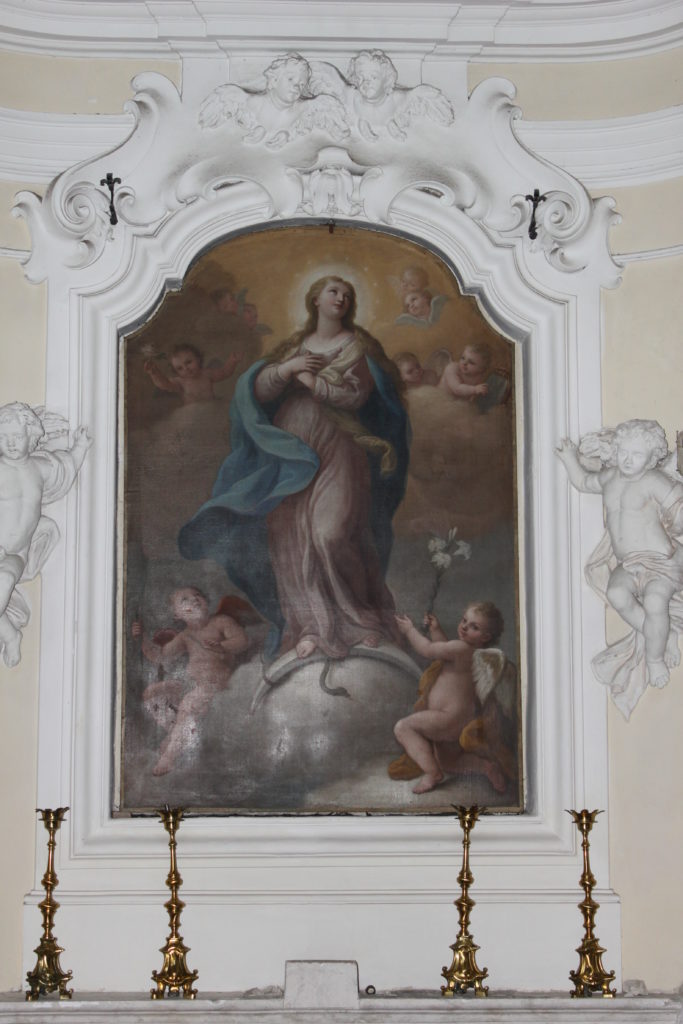
    La devozione verso l’Immacolata Concezione è molto antica anche se il dogma cattolico fu proclamato da Papa Pio IX l’8 dicembre 1854 con la bolla Ineffabilis Deus.
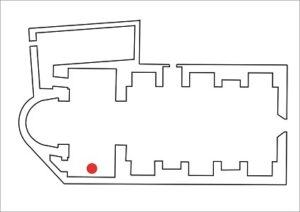
    L’altare maggiore della chiesa seicentesca di S. Maria Maggiore era dedicato proprio all’Immacolata Concezione e sopra il dossale si conservava un dipinto con la medesima iconografia. Con il terremoto del 1732, il dipinto probabilmente andò distrutto e l’arciprete Pietro Antonio Perillo, coordinatore della ricostruzione della fabbrica di S. Maria Maggiore, commissionò nel 1766 ai fratelli Antonio e Giovanni Sarnelli una nuova rappresentazione dell’Immacolata, che non venne più riposizionata sull’altare maggiore ma in una cappella laterale realizzata appositamente.
    La Vergine è rappresentata nell’iconografia classica dell’Immacolata Concezione, cioè in posizione assisa, incoronata da dodici stelle, con le mani al petto e con la luna e il serpente sotto i piedi. Ai lati, quattro angeli sorreggono gli attributi iconografici della Vergine. Ogni attributo è la riproduzione simbolica dei titoli o degli appellativi della Vergine. Abbiamo una rosa (rosa mistica), uno specchio (specchio senza macchia), la verga (è la verga di Jesse, l’albero simbolico della genealogia di Cristo) e il giglio (simbolo di purezza).
    La tela è firmata e datata: “Sarnelli 1766”.

    The devotion to the Immaculate Conception is very old even if the Catholic dogma was proclaimed by Pope Pius IX on December 8th, 1854 with the bull Ineffabilis Deus.
    The main altar of the seventeenth-century church of S. Maria Maggiore was dedicated to the Immaculate Conception and above the dossal there was a painting with the same iconography. With the earthquake in 1732, the painting was probably destroyed and the archpriest Pietro Antonio Perillo, coordinator of the reconstruction of S. Maria Maggiore, commissioned in 1766 to the brothers Antonio and Giovanni Sarnelli a new representation of the Immaculate Conception, which no longer was repositioned on the main altar but in a specially made side chapel.
    The Virgin is represented in the classic iconography of the Immaculate Conception, that is, in a seated position, crowned by twelve stars, with her hands on her chest and with the moon and the snake under her feet. On the sides, four angels support the iconographic attributes of the Virgin. Each attribute is the symbolic reproduction of the titles or appellations of the Virgin. We have a rose (mystic rose), a mirror (spotless mirror), the rod (it is the rod of Jesse, the symbolic tree of the genealogy of Christ) and the lily (symbol of purity). 
    The canvas is signed and dated: “Sarnelli 1766“.

    grotta immacolata

    italia

    Chiesa di S. Maria Maggiore
    Dipinto
    Antonio e GiovannI Sarnelli
    Immacolata Concezione
    Sec. XVIII (dat. 1766)
    Olio su tela

    Church of S. Maria Maggiore
    Painting
    Antonio and Giovanni Sarnelli
    Immaculate Conception
    XVIII century (date 1766)
    Oil painting on canvas

    La devozione verso l’Immacolata Concezione è molto antica anche se il dogma cattolico fu proclamato da Papa Pio IX l’8 dicembre 1854 con la bolla Ineffabilis Deus.
    L’altare maggiore della chiesa seicentesca di S. Maria Maggiore era dedicato proprio all’Immacolata Concezione e sopra il dossale si conservava un dipinto con la medesima iconografia. Con il terremoto del 1732, il dipinto probabilmente andò distrutto e l’arciprete Pietro Antonio Perillo, coordinatore della ricostruzione della fabbrica di S. Maria Maggiore, commissionò nel 1766 ai fratelli Antonio e Giovanni Sarnelli una nuova rappresentazione dell’Immacolata, che non venne più riposizionata sull’altare maggiore ma in una cappella laterale realizzata appositamente.
    La Vergine è rappresentata nell’iconografia classica dell’Immacolata Concezione, cioè in posizione assisa, incoronata da dodici stelle, con le mani al petto e con la luna e il serpente sotto i piedi. Ai lati, quattro angeli sorreggono gli attributi iconografici della Vergine. Ogni attributo è la riproduzione simbolica dei titoli o degli appellativi della Vergine. Abbiamo una rosa (rosa mistica), uno specchio (specchio senza macchia), la verga (è la verga di Jesse, l’albero simbolico della genealogia di Cristo) e il giglio (simbolo di purezza).
    La tela è firmata e datata: “Sarnelli 1766”.

    The devotion to the Immaculate Conception is very old even if the Catholic dogma was proclaimed by Pope Pius IX on December 8th, 1854 with the bull Ineffabilis Deus.
    The main altar of the seventeenth-century church of S. Maria Maggiore was dedicated to the Immaculate Conception and above the dossal there was a painting with the same iconography. With the earthquake in 1732, the painting was probably destroyed and the archpriest Pietro Antonio Perillo, coordinator of the reconstruction of S. Maria Maggiore, commissioned in 1766 to the brothers Antonio and Giovanni Sarnelli a new representation of the Immaculate Conception, which no longer was repositioned on the main altar but in a specially made side chapel.
    The Virgin is represented in the classic iconography of the Immaculate Conception, that is, in a seated position, crowned by twelve stars, with her hands on her chest and with the moon and the snake under her feet. On the sides, four angels support the iconographic attributes of the Virgin. Each attribute is the symbolic reproduction of the titles or appellations of the Virgin. We have a rose (mystic rose), a mirror (spotless mirror), the rod (it is the rod of Jesse, the symbolic tree of the genealogy of Christ) and the lily (symbol of purity). 
    The canvas is signed and dated: “Sarnelli 1766“.

  • Madonna Assunta

    Chiesa di S. Maria Maggiore
    Scultura
    Madonna Assunta
    Sec. XVIII (seconda metà)
    Legno scolpito / dipinto 
    Ambito culturale napoletano

    Church of S. Maria Maggiore
    Sculpture
    Madonna Assunta
    18th century (second half)
    Carved / painted wood
    Neapolitan cultural sphere

    Altro titolo meno noto della Chiesa di S. Maria Maggiore è “S. Maria Assunta in Cielo”, intitolazione che venne definita nel 1774, al momento della consacrazione dell’edificio. Prima di allora l’edificio era semplicemente dedicato a S. Maria, definita con l’appellativo “maggiore” per distinguerla dalla altre chiese della parrocchia dedicate alla Vergine e soprattutto per evidenziare che era la chiesa parrocchiale principale.
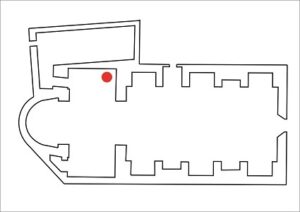
    Il culto verso l’Assunta è molto antico, già nel Seicento nell’odierna chiesa era documentata unacappella sotto questo titolo, situata nella parte centrale dell’edificio. In questa stessa cappella, nel 1624, venne realizzato dallo scultore Francesco Vannelli il monumento funebre dell’Arciprete Giovanni Nicola De Bellucis, i cui resti sono conservati murati nel campanile della Chiesa.
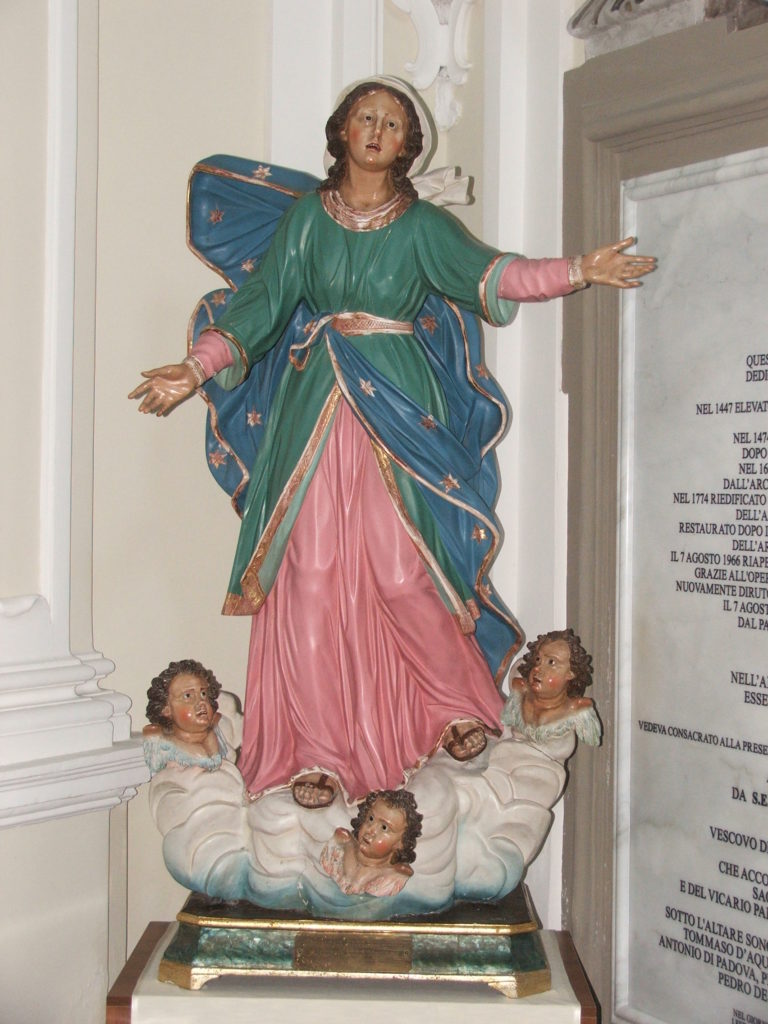
    La Vergine è rappresentata con tratti da popolana, in piedi su di una nuvola e con le mani in adorazione.
    L’opera è stata restaurata varie volte nel corso dei secoli e due volte durante il Novecento (1950 e anni Novanta).

    Another lesser known title of the Church of S. Maria Maggiore is “S. Maria Assunta in Cielo “, a title that was defined in 1774, when the building was consecrated. Before then the building was simply dedicated to S. Maria, defined with the name “Major” to distinguish it from other parish churches dedicated to the Virgin and above all to highlight that it was the main parish church.
    The cult towards the Assumption is very ancient, already in the seventeenth century a chapel was documented under this title, located in the central part of the building. In this same chapel, in 1624, the funeral monument of the Archpriest Giovanni Nicola De Bellucis was built by the sculptor Francesco Vannelli, the remains of which are preserved walled in the bell tower of the Church.
    The Virgin is represented with common-sense traits, standing on a cloud and with her hands in adoration.
    The work has been restored several times over the centuries and twice during the twentieth century (1950 and nineties).

    Assunta
    grotta assunta

    italia

    Chiesa di S. Maria Maggiore
    Scultura
    Madonna Assunta
    Sec. XVIII (seconda metà)
    Legno scolpito / dipinto 
    Ambito culturale napoletano

    Church of S. Maria Maggiore
    Sculpture
    Madonna Assunta
    18th century (second half)
    Carved / painted wood
    Neapolitan cultural sphere

    Altro titolo meno noto della Chiesa di S. Maria Maggiore è “S. Maria Assunta in Cielo”, intitolazione che venne definita nel 1774, al momento della consacrazione dell’edificio. Prima di allora l’edificio era semplicemente dedicato a S. Maria, definita con l’appellativo “maggiore” per distinguerla dalla altre chiese della parrocchia dedicate alla Vergine e soprattutto per evidenziare che era la chiesa parrocchiale principale.
    Il culto verso l’Assunta è molto antico, già nel Seicento nell’odierna chiesa era documentata unacappella sotto questo titolo, situata nella parte centrale dell’edificio. In questa stessa cappella, nel 1624, venne realizzato dallo scultore Francesco Vannelli il monumento funebre dell’Arciprete Giovanni Nicola De Bellucis, i cui resti sono conservati murati nel campanile della Chiesa.
    La Vergine è rappresentata con tratti da popolana, in piedi su di una nuvola e con le mani in adorazione.
    L’opera è stata restaurata varie volte nel corso dei secoli e due volte durante il Novecento (1950 e anni Novanta).

    Another lesser known title of the Church of S. Maria Maggiore is “S. Maria Assunta in Cielo “, a title that was defined in 1774, when the building was consecrated. Before then the building was simply dedicated to S. Maria, defined with the name “Major” to distinguish it from other parish churches dedicated to the Virgin and above all to highlight that it was the main parish church.
    The cult towards the Assumption is very ancient, already in the seventeenth century a chapel was documented under this title, located in the central part of the building. In this same chapel, in 1624, the funeral monument of the Archpriest Giovanni Nicola De Bellucis was built by the sculptor Francesco Vannelli, the remains of which are preserved walled in the bell tower of the Church.
    The Virgin is represented with common-sense traits, standing on a cloud and with her hands in adoration.
    The work has been restored several times over the centuries and twice during the twentieth century (1950 and nineties).

    Assunta
  • Cristo Crocifisso

    Chiesa di S. Maria Maggiore
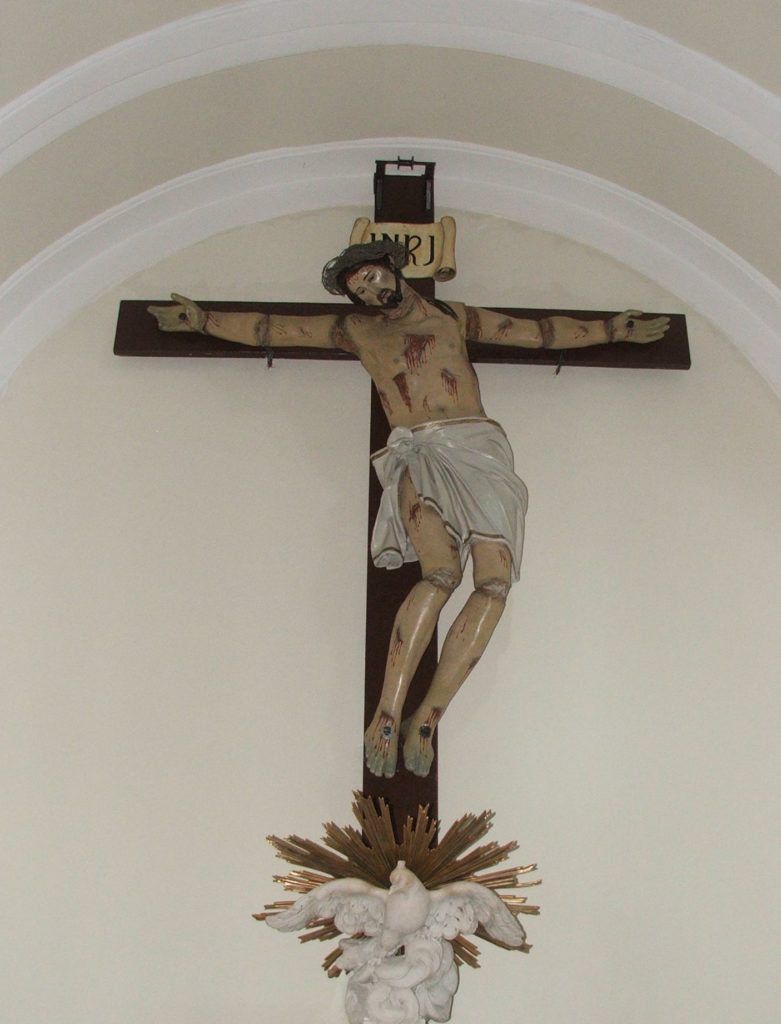
    Crocifisso mobile
    Cristo crocifisso
    Sec. XIX (prima metà) 
    Cartapesta e gesso dipinto
    Ambito irpino

    Church of S. Maria Maggiore
    Mobile crucifix
    Crucified Christ
    19th century (first half)
    Papier-mache and painted plaster
    Irpinia background

    L’opera appartiene alla serie dei Crocifissi mobili, noti fin dal Medioevo, che venivano utilizzati durante la liturgia del Triduo Pasquale che prevedeva alcuni riti con l’immagine del Cristo crocifisso e del Cristo deposto. Queste sculture, avendo parti del corpo mobili, fungevano sia da crocifissi che da deposti. In particolare, venivano usati durante il Venerdì Santo per rendere più verosimile la celebrazione del rito della deposizione dalla Croce.
    Grottaminarda, fino al terremoto del 1980, aveva anch’essa la sua rappresentazione sacra dei riti pasquali: la macchina scenografica veniva montata nell’area presbiteriale e l’altare maggiore rappresentava il calvario su cui era infissa la croce con il Crocifisso. Durante la lettura della Passione, attraverso lo scioglimento di alcune corde, avveniva la morte di Gesù, che materialmente chinava la testa sul petto.
    Alla fine della liturgia, sempre attraverso corde e con l’ausilio di alcune persone, il Cristo veniva calato dalla croce e deposto su di un lettuccio che veniva poi portato a spalle per le vie della cittadina.
    Celebre, durante la processione, era anche l’incontro della Vergine Addolorata con il figlio morto, che avveniva nei pressi di Portaurea. I due cortei, uno con il Cristo morto e uno con la Vergine, partivano dalle due chiese principali e si incontravano a Portaurea dove si fondevano in una sola processione.

    The work belongs to the series of mobile Crucifixes, known since the Middle Ages, which were used during the liturgy of the Easter Triduum and included some rites with the image of the crucified Christ and the deposed Christ. These sculptures, having mobile body parts, served as both crucifixes and depositions. In particular, they were used during Good Friday to make the celebration of the rite of deposition from the Cross more likely.
    Until the earthquake of 1980, Grottaminarda also had its sacred representation of the Easter rites: the scenographic machine was mounted in the presbytery area and the high altar represented the ordeal on which the cross with the Crucifix was fixed. During the reading of the Passion, through the melting of some ropes, the death of Jesus occurred, who materially bowed his head on his chest.
    At the end of the liturgy, always through ropes and with the help of some people, Christ was lowered from the cross and placed on a bed which was then carried on the shoulders through the streets of the town.
    Famous during the procession was also the meeting of the Virgin of Sorrows with her dead son, which took place near Portaurea. The two processions, one with the dead Christ and one with the Virgin, started from the two main churches and met in Portaurea where they merged in one procession.

    Cristo Crocifisso

    italia

    Chiesa di S. Maria Maggiore
    Crocifisso mobile
    Cristo crocifisso
    Sec. XIX (prima metà) 
    Cartapesta e gesso dipinto
    Ambito irpino

    Church of S. Maria Maggiore
    Mobile crucifix
    Crucified Christ
    19th century (first half)
    Papier-mache and painted plaster
    Irpinia background

    L’opera appartiene alla serie dei Crocifissi mobili, noti fin dal Medioevo, che venivano utilizzati durante la liturgia del Triduo Pasquale che prevedeva alcuni riti con l’immagine del Cristo crocifisso e del Cristo deposto. Queste sculture, avendo parti del corpo mobili, fungevano sia da crocifissi che da deposti. In particolare, venivano usati durante il Venerdì Santo per rendere più verosimile la celebrazione del rito della deposizione dalla Croce.
    Grottaminarda, fino al terremoto del 1980, aveva anch’essa la sua rappresentazione sacra dei riti pasquali: la macchina scenografica veniva montata nell’area presbiteriale e l’altare maggiore rappresentava il calvario su cui era infissa la croce con il Crocifisso. Durante la lettura della Passione, attraverso lo scioglimento di alcune corde, avveniva la morte di Gesù, che materialmente chinava la testa sul petto.
    Alla fine della liturgia, sempre attraverso corde e con l’ausilio di alcune persone, il Cristo veniva calato dalla croce e deposto su di un lettuccio che veniva poi portato a spalle per le vie della cittadina.
    Celebre, durante la processione, era anche l’incontro della Vergine Addolorata con il figlio morto, che avveniva nei pressi di Portaurea. I due cortei, uno con il Cristo morto e uno con la Vergine, partivano dalle due chiese principali e si incontravano a Portaurea dove si fondevano in una sola processione.

    The work belongs to the series of mobile Crucifixes, known since the Middle Ages, which were used during the liturgy of the Easter Triduum and included some rites with the image of the crucified Christ and the deposed Christ. These sculptures, having mobile body parts, served as both crucifixes and depositions. In particular, they were used during Good Friday to make the celebration of the rite of deposition from the Cross more likely.
    Until the earthquake of 1980, Grottaminarda also had its sacred representation of the Easter rites: the scenographic machine was mounted in the presbytery area and the high altar represented the ordeal on which the cross with the Crucifix was fixed. During the reading of the Passion, through the melting of some ropes, the death of Jesus occurred, who materially bowed his head on his chest.
    At the end of the liturgy, always through ropes and with the help of some people, Christ was lowered from the cross and placed on a bed which was then carried on the shoulders through the streets of the town.
    Famous during the procession was also the meeting of the Virgin of Sorrows with her dead son, which took place near Portaurea. The two processions, one with the dead Christ and one with the Virgin, started from the two main churches and met in Portaurea where they merged in one procession.

    Cristo Crocifisso
  • San Gerardo Maiella

    Chiesa di S. Maria Maggiore
    Scultura
    San Gerardo Maiella 
    Sec. XX (prima metà)
    Cartapesta modellata / dipinta
    Ambito culturale pugliese

    Church of S. Maria Maggiore
    Sculpture
    San Gerardo Maiella
    20th century (first half)
    Molded / painted papier mache
    Apulian cultural background

    La scultura proveniente dalla Chiesa di S. Maria del Carmine, venne acquistata a seguito della canonizzazione di San Gerardo, avvenuta nel 1903, per il culto rapidamente diffusosi tra i fedeli di Grottaminarda che numerosi si recavano in pellegrinaggio a Materdomini.
    La statua, comunque, doveva già essere a Grottaminarda nel 1946 poiché abbiamo notizia della festa che veniva organizzata in onore del Santo nel luglio di quell’anno.
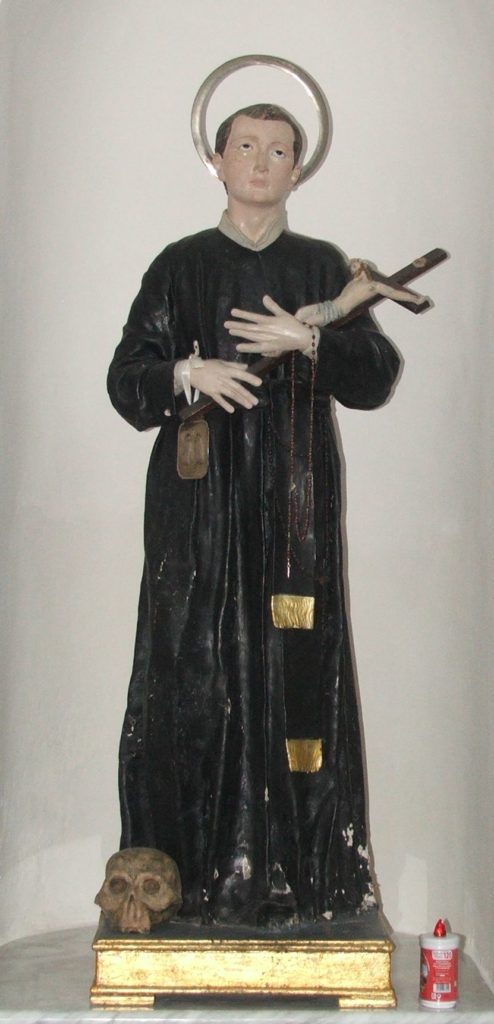
    Il Santo è rappresentato secondo l’iconografia più antica come un giovane vestito con l’abito dei Padri Redentoristi, l’ordine di cui faceva parte, con una croce tra le braccia, il viso rivolto verso l’alto e un teschio vicino ai piedi.
    La scultura è in cartapesta e potrebbe essere stata prodotta in una bottega leccese o salentina, terra dove esperti artigiani furono attivi tra la fine del XVIII secolo e la prima metà del Novecento. In quel periodo la Puglia divenne un centro di smistamento di questa tipologia artistica in tutta l’Italia Meridionale.

    The sculpture from the Church of S. Maria del Carmine was purchased following the canonization of San Gerardo, which took place in 1903, for the cult quickly spread among the faithfuls of Grottaminarda who numerous went on pilgrimage to Materdomini.
    The statue, however, must have already been in Grottaminarda in 1946 since we have news of the feast that was organized in honor of the Saint in July of that year.
    According to the oldest iconography, the Saint is represented as a young man dressed in the habit of the Redemptorist Fathers, the order of which he belonged, with a cross in his arms, his face turned upwards and a skull near his feet.
    The sculpture is in papier-mâché and may have been produced in a workshop in Lecce or Salento, a land where expert craftsmen were active between the end of the 18th century and the first half of the twentieth century. In that period Puglia became a sorting center for this artistic typology throughout Southern Italy.

    San gerardo
    grotta lucia e gerardo

    italia

    Chiesa di S. Maria Maggiore
    Scultura
    San Gerardo Maiella 
    Sec. XX (prima metà)
    Cartapesta modellata / dipinta
    Ambito culturale pugliese

    Church of S. Maria Maggiore
    Sculpture
    San Gerardo Maiella
    20th century (first half)
    Molded / painted papier mache
    Apulian cultural background

    La scultura proveniente dalla Chiesa di S. Maria del Carmine, venne acquistata a seguito della canonizzazione di San Gerardo, avvenuta nel 1903, per il culto rapidamente diffusosi tra i fedeli di Grottaminarda che numerosi si recavano in pellegrinaggio a Materdomini.
    La statua, comunque, doveva già essere a Grottaminarda nel 1946 poiché abbiamo notizia della festa che veniva organizzata in onore del Santo nel luglio di quell’anno.
    Il Santo è rappresentato secondo l’iconografia più antica come un giovane vestito con l’abito dei Padri Redentoristi, l’ordine di cui faceva parte, con una croce tra le braccia, il viso rivolto verso l’alto e un teschio vicino ai piedi.
    La scultura è in cartapesta e potrebbe essere stata prodotta in una bottega leccese o salentina, terra dove esperti artigiani furono attivi tra la fine del XVIII secolo e la prima metà del Novecento. In quel periodo la Puglia divenne un centro di smistamento di questa tipologia artistica in tutta l’Italia Meridionale.

    The sculpture from the Church of S. Maria del Carmine was purchased following the canonization of San Gerardo, which took place in 1903, for the cult quickly spread among the faithfuls of Grottaminarda who numerous went on pilgrimage to Materdomini.
    The statue, however, must have already been in Grottaminarda in 1946 since we have news of the feast that was organized in honor of the Saint in July of that year.
    According to the oldest iconography, the Saint is represented as a young man dressed in the habit of the Redemptorist Fathers, the order of which he belonged, with a cross in his arms, his face turned upwards and a skull near his feet.
    The sculpture is in papier-mâché and may have been produced in a workshop in Lecce or Salento, a land where expert craftsmen were active between the end of the 18th century and the first half of the twentieth century. In that period Puglia became a sorting center for this artistic typology throughout Southern Italy.

    San gerardo
  • S. Lucia da Siracusa

    Chiesa di S. Maria Maggiore
    Scultura
    Santa Lucia da Siracusa 

    Ambito culturale napoletano
    Sec. XVIII (seconda metà)
    Legno scolpito e dipinto

    Church of S. Maria Maggiore
    Sculpture
    St. Lucia of Syracuse

    Neapolitan cultural sphere
    18th century (second half)
    Carved and painted wood

    Il culto di S. Lucia è uno dei più antichi della comunità grottese: risale alla metà del XV secolo, quando è attestato per la prima volta un edificio sacro dedicato alla santa. Probabilmente la venerazione della santa protettrice della vista venne favorito dalla famiglia d’Aquino che realizzò o autorizzò la costruzione della cappella in una delle torri delle mura di cinta di Grottaminarda. L’edificio oggi non è più esistente, venne abbattuto dopo il terremoto del 1980 per questioni di sicurezza. 
    La scultura, in origine, era conservata in una cappella della Chiesa di S. Maria del Carmine, abbattuta durante gli anni Sessanta del Novecento. L’opera dopo i restauri effettuati a seguito del terremoto del 1980 venne collocata nella chiesa di S. Maria Maggiore.
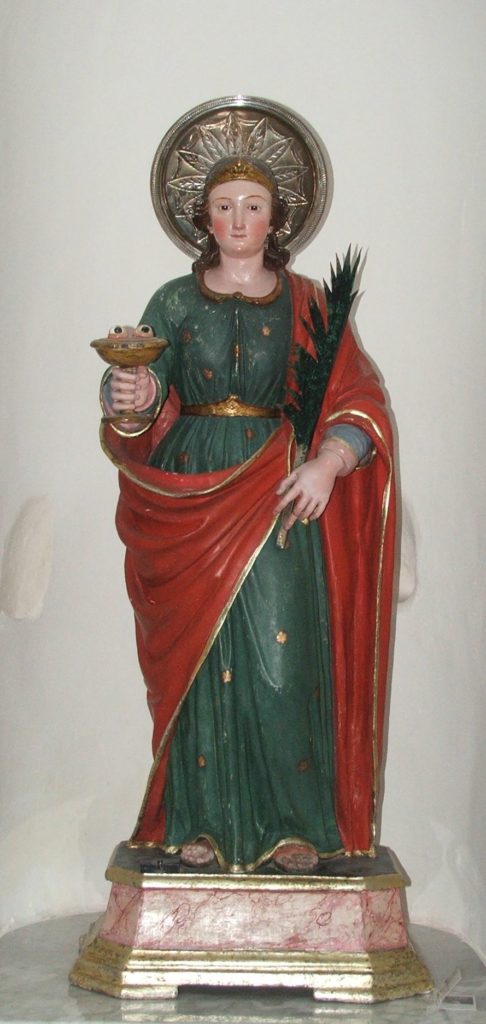
    La santa è rappresentata secondo i canoni dell’iconografia classica: una giovane e bella fanciulla che reca nella mano una coppa con un paio di occhi, simbolo delle torture a cui fu sottoposta durante le persecuzioni di Diocleziano per mano del prefetto Pascasio.
    La scultura per l’impianto plastico e figurativo è riferibile all’ambito artistico napoletano della seconda metà del secolo XVIII.

    The cult of S. Lucia is one of the oldest in the Grottese community: it dates back to the mid-fifteenth century, when a sacred building dedicated to the saint is attested for the first time. Probably the veneration of the patron saint of sight was favored by the Aquino family who built or authorized the construction of the chapel in one of the towers of the walls in Grottaminarda. Today the building no longer exists, it was demolished after the 1980 earthquake for safety reasons. 
    The sculpture was originally kept in a chapel of the Church of S. Maria del Carmine, demolished during the 1960s. After the restoration carried out following the 1980 earthquake, the work was placed in the church of S. Maria Maggiore.
    The saint is represented according to the canons of classical iconography: a young and beautiful girl holding a cup with a pair of eyes, a symbol of the torture to which she was subjected during the persecutions of Diocletian at the hands of the prefect Pascasio.
    The sculpture for the plastic and figurative system refers to the Neapolitan artistic sphere of the second half of the XVIII century.

    santa lucia
    grotta lucia e gerardo

    italia

    Chiesa di S. Maria Maggiore
    Scultura
    Santa Lucia da Siracusa 

    Ambito culturale napoletano
    Sec. XVIII (seconda metà)
    Legno scolpito e dipinto

    Church of S. Maria Maggiore
    Sculpture
    St. Lucia of Syracuse

    Neapolitan cultural sphere
    18th century (second half)
    Carved and painted wood

    Il culto di S. Lucia è uno dei più antichi della comunità grottese: risale alla metà del XV secolo, quando è attestato per la prima volta un edificio sacro dedicato alla santa. Probabilmente la venerazione della santa protettrice della vista venne favorito dalla famiglia d’Aquino che realizzò o autorizzò la costruzione della cappella in una delle torri delle mura di cinta di Grottaminarda. L’edificio oggi non è più esistente, venne abbattuto dopo il terremoto del 1980 per questioni di sicurezza. 
    La scultura, in origine, era conservata in una cappella della Chiesa di S. Maria del Carmine, abbattuta durante gli anni Sessanta del Novecento. L’opera dopo i restauri effettuati a seguito del terremoto del 1980 venne collocata nella chiesa di S. Maria Maggiore.
    La santa è rappresentata secondo i canoni dell’iconografia classica: una giovane e bella fanciulla che reca nella mano una coppa con un paio di occhi, simbolo delle torture a cui fu sottoposta durante le persecuzioni di Diocleziano per mano del prefetto Pascasio.
    La scultura per l’impianto plastico e figurativo è riferibile all’ambito artistico napoletano della seconda metà del secolo XVIII.

    The cult of S. Lucia is one of the oldest in the Grottese community: it dates back to the mid-fifteenth century, when a sacred building dedicated to the saint is attested for the first time. Probably the veneration of the patron saint of sight was favored by the Aquino family who built or authorized the construction of the chapel in one of the towers of the walls in Grottaminarda. Today the building no longer exists, it was demolished after the 1980 earthquake for safety reasons. 
    The sculpture was originally kept in a chapel of the Church of S. Maria del Carmine, demolished during the 1960s. After the restoration carried out following the 1980 earthquake, the work was placed in the church of S. Maria Maggiore.
    The saint is represented according to the canons of classical iconography: a young and beautiful girl holding a cup with a pair of eyes, a symbol of the torture to which she was subjected during the persecutions of Diocletian at the hands of the prefect Pascasio.
    The sculpture for the plastic and figurative system refers to the Neapolitan artistic sphere of the second half of the XVIII century.

    santa lucia